You are not performing, you are having conversations
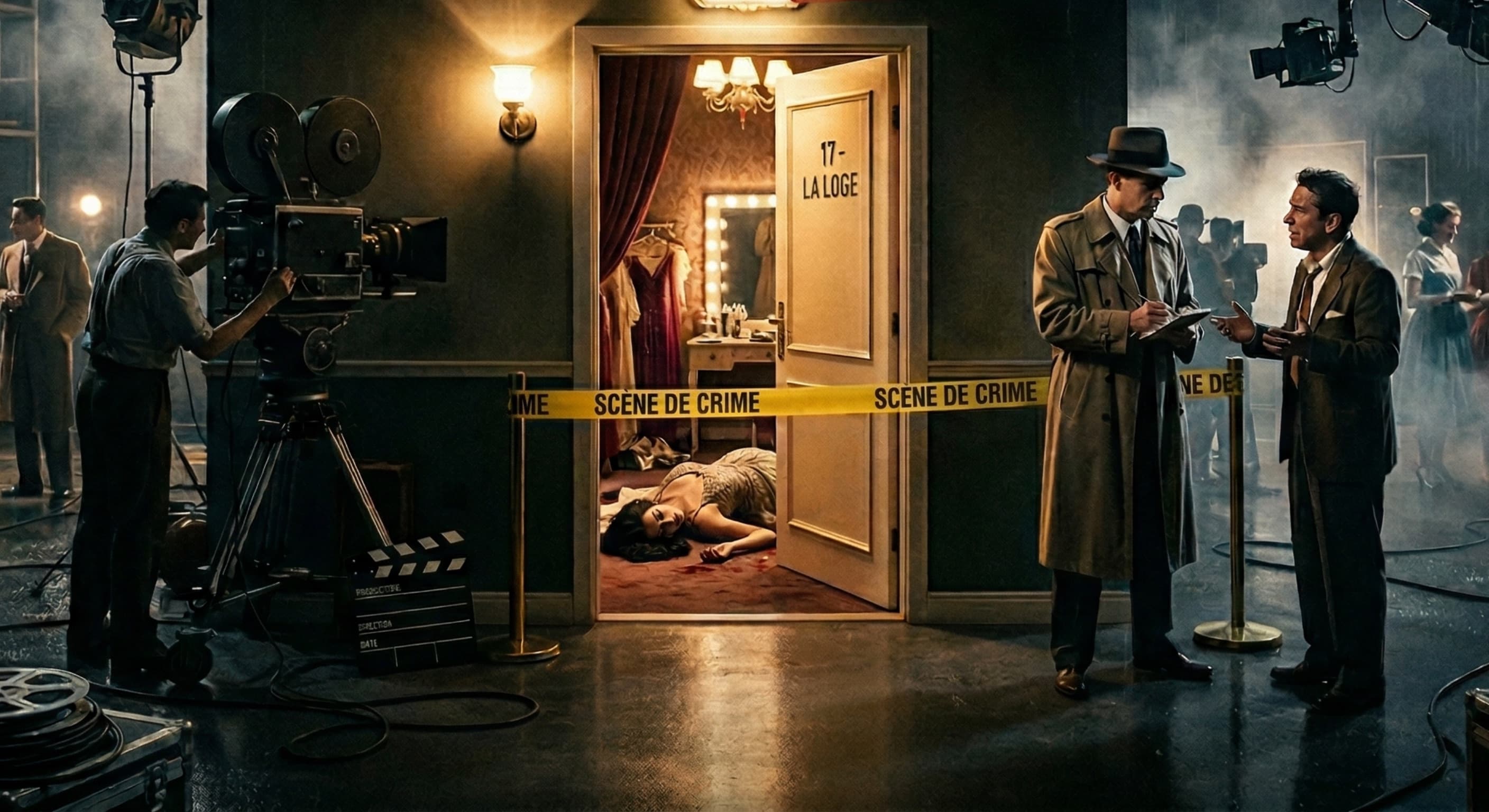
The biggest misconception is that a murder mystery party is amateur theater. It is not. There is no script to memorize, no stage, and no audience. What actually happens is that you spend the evening in conversations, the same kind you would have at any party, except you are answering as a character instead of as yourself. Your character sheet tells you a few facts: your name, your relationship to the victim, what you want from the night, and one or two secrets. When someone asks you a question, you answer using those facts. That is the entire skill involved. Some guests commit fully with an accent and a costume, and others simply say what is on their sheet in their normal voice. Both approaches work in the same room without friction. Nobody is scoring your performance, and the mystery resolves correctly either way.
What the first thirty minutes look like
You arrive, you get a drink, and you probably feel slightly self-conscious. Everyone does. You will notice a few guests in obvious costume and a few in a single accessory, and within ten minutes nobody is thinking about it anymore. The host hands you an envelope or you receive your character a few days ahead. Read it once carefully, then read it again and note the two or three things you must not reveal. Small talk in character starts naturally when someone asks who you are supposed to be. Then the host calls the room together and reads the opening: the crime, the setting, and the reason everyone is stuck in the same place. The first round begins immediately after. If you feel lost for the first ten minutes, that is normal and it passes as soon as someone asks you a direct question.
What is actually inside a kit
Knowing what the materials are makes the whole thing less mysterious in the unhelpful sense. A printable kit is a set of PDF files the host downloads instantly and prints at home. Inside are character sheets, one per player, each running one or two pages. There is a host guide with the full solution and the passages to read aloud. There are clues: letters, receipts, photographs, telegram transcripts, newspaper clippings, whatever fits the setting. Many kits also include invitations, name badges, and suggested costume notes you can hand out in advance. Nothing ships physically, which is why a host can decide on Thursday to run a party on Saturday. Kits on /murder-mystery-kits run from 39 to 59 dollars depending on the number of players covered, and the price is per group, not per person, so the cost per guest is usually a few dollars.
How much you have to read before the night
Less than you think. A character sheet takes about ten minutes to read properly. Read it twice: once for the story and once to underline the specific things you are supposed to say or withhold. You do not need to memorize anything, and most hosts are perfectly happy for players to keep their sheet in hand during the game. Many people fold it into a pocket and glance at it when questioned. What genuinely helps is deciding one small detail about your character that is not on the page, like how they feel about the victim, because that gives you something to draw on when a question goes beyond your notes. Improvising a harmless detail is always allowed. The only rule is that you do not invent facts that contradict your sheet, since those are the facts other players need to solve the case.
What happens when someone guesses early, or nobody guesses
Both outcomes are fine and neither breaks the evening. Well-built scenarios hide the culprit behind several layers, so an early guess is usually a hunch rather than a solved case, and the player still cannot prove it. If someone does crack it in round two, the remaining rounds become about confirming motive and method, which is still satisfying. The opposite happens too. Sometimes a group reaches the final accusation and everyone is wrong. That is not a failure, it is the most common outcome at a well-balanced table, and the reveal lands much harder for it. Groups that get it wrong tend to spend the next twenty minutes retracing clues and enjoying themselves enormously. Hosts running a kit for the first time should not feel responsible for either result. The scenario is calibrated to give the group a fair chance without handing over the answer.
Choosing a first scenario that sets you up to enjoy it
For a first time, favor a scenario with a clear, familiar setting over one with a complicated premise. A dinner at a country house, a hotel, or a nightclub gives everyone an instant mental picture and obvious reasons to interact. Avoid anything that requires players to track multiple timelines or invented lore on a first outing. Look for a player count that matches your group exactly rather than stretching a large kit over a small group. Six to ten players is a comfortable beginner range. If your group is two people rather than a full party, the /detective-case-files format is a better fit: it is a document based investigation for one or two players at 39 dollars, with no hosting required. If your group has never done anything like this, tell them so in the invitation. Shared beginner status removes almost all of the self-consciousness.
Frequently asked questions
What if I am shy and hate being the center of attention?+
Murder mystery parties suit shy guests better than most party games, because conversations happen in small clusters rather than in front of the whole room. Ask your host for a character with concrete information to deliver. Having a specific job to do is far easier than open-ended socializing.
Do I have to wear a costume?+
No. One accessory that signals your character, a hat, a scarf, a pair of glasses, is enough to help other players remember who you are. Hosts should state the expected level in the invitation so guests arrive on the same page.
What if I get assigned the killer and I am a bad liar?+
Playing the culprit is easier than it sounds, because your sheet tells you exactly what to admit and what to deflect. Being a visibly bad liar is often an advantage: half the table assumes anyone acting nervous is a decoy, which is exactly the confusion the scenario is designed to create.
Can I drink during a murder mystery party?+
Yes, and most groups do. Keep it moderate through the investigation rounds, since the game depends on people remembering what they were told. Many hosts serve one drink on arrival, food between rounds, and open things up once the reveal is finished.