Why book clubs are unusually good at this
Most hosting guides spend their energy convincing guests that a murder mystery party is not intimidating. With a book club you can skip that entirely. These are people who volunteer to read four hundred pages and then discuss another person's motivations for two hours. They are practiced at exactly the skills the game rewards: tracking who said what, noticing a detail that contradicts an earlier claim, and defending an interpretation against someone who read the same evidence differently. They also have a social habit the game depends on, which is disagreeing pleasantly. The one thing a book club sometimes lacks is comfort with performance, since discussion and role play are different muscles. That is easily handled by telling everyone at the start that reading from the character sheet in your own voice is a perfectly normal way to play, and by choosing a format that leans on analysis rather than acting. Both options below do that.
Format one: the mystery as a standalone night
The simplest version is to give one meeting to the game and skip the book for that month. Choose a scenario whose player range matches your regular attendance, which for most clubs is six to twelve, and send character sheets out with the usual meeting reminder a week ahead. Treat the character sheet as that month's reading: it takes ten minutes instead of ten hours, which several members will privately appreciate. Run it exactly as a normal party, with rounds, clues and a reveal, then do what a book club does best and spend the last half hour dissecting the construction. Which clue was the real one. Was the culprit fairly signposted. Did anyone spot the misdirection. That final conversation is the part a book club gets that other groups do not, and it is worth protecting time for. Scenarios on /murder-mystery-kits list the player range and setting for each one, at 39 to 59 dollars for the whole group.
Format two: pair the mystery with the month's book
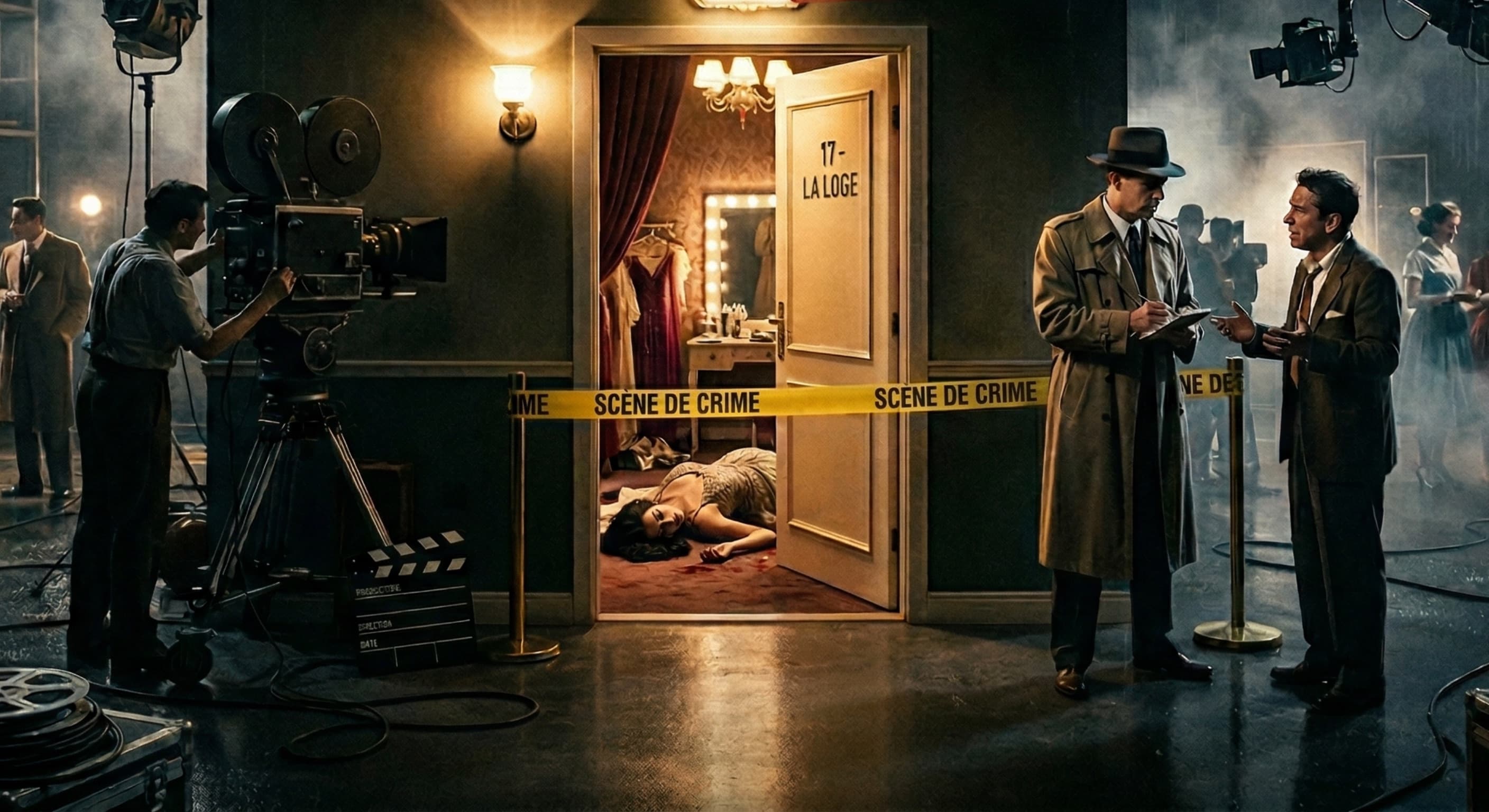
The more ambitious version is to read a crime novel and then play a scenario in a matching register the same evening. Pair a golden age puzzle novel with a manor house or a train scenario. Pair a noir with a scenario set in a nightclub or a film studio. Pair a locked room story with a scenario that constrains the cast to one location. The pairing turns the evening into an argument with itself: the club has just spent a month with an author's version of a detective plot, and now has to solve one from the inside. Discussions after a paired night are consistently the best of the year, because members have a concrete comparison rather than an abstract one. The practical risk is time. Two hours of discussion plus three hours of game is too long for a weeknight, so use the structure in the next section rather than trying to run both at full length.
Fitting reading and playing into one evening
A paired night needs a hard schedule agreed in advance, or the discussion expands to fill the room and the game starts at ten. The structure that works is forty-five minutes of book discussion at the start, over a drink, tightly chaired by whoever normally leads. Then a firm transition: distribute character envelopes, read the opening passage, and the evening becomes the game. Ninety minutes to two hours of play in two rounds rather than three, then accusations and the reveal. Total, about three hours, which is a long book club night but a manageable one. Two rules keep it honest. Nominate a timekeeper who is not you, because the host cannot chair a discussion and watch a clock at the same time. And do not try to discuss the novel after the game, since nobody will want to return to it. Any comparison between the book and the scenario belongs in the post reveal conversation, where it happens naturally anyway.
Casting a book club, where everyone has opinions
Book clubs have a distinctive dynamic worth casting around. There is usually one member who arrives having read every review, one who reliably takes the contrarian position, one or two who speak less but are the most accurate readers in the room, and at least one who has not finished the book. Give the culprit role to the quiet accurate reader rather than the loudest member, because a culprit who is used to being watched is much harder to catch than one who enjoys attention. Give the contrarian a character with a strong false lead to push, since they will commit to it magnificently and pull half the club with them. Give the reviewer a role with a lot of factual information to distribute. Give anyone who might arrive unprepared a straightforward character with a short sheet they can absorb on the spot. Send sheets individually by email rather than to the club thread, since half the pleasure is nobody knowing who received what.
The smaller option for a club of four or five
Not every book club is ten people. If yours is four or five regulars around one table, the party format is workable but a document based investigation is often the better evening. A case file from /detective-case-files at 39 dollars gives you a folder of evidence, reports, statements, photographs and correspondence, with a solution that follows strictly from the documents and no characters to play. The group works it together, exactly the way a book club already discusses a text, and the conversation is argumentative and evidence driven from the first minute. It also requires no host, which means nobody has to sit out knowing the answer. Run it as a half meeting: an hour on the case, then the usual discussion. Several clubs use this format as a palate cleanser between long novels, and because everything is a printable PDF you keep, you can hand the same folder to a member who missed the night.
Frequently asked questions
Should we read a book and play a mystery on the same night?+
You can, with a hard schedule: forty-five minutes of discussion first, then a firm transition into two rounds of play and the reveal, about three hours total. Nominate a timekeeper who is not the host, and do not return to the novel after the game.
Which crime novels pair well with a scenario?+
Match the register rather than the plot. A golden age puzzle novel pairs with a manor house or train scenario, a noir with a nightclub or film studio setting, and a locked room story with any scenario that confines the cast to one location for the evening.
Our club is only five people. Does the format still work?+
Yes, with a scenario written for four to six players rather than a larger one trimmed down. For a group that prefers discussion to role play, a document based case file is often the better evening: everyone works the same evidence together and no host sits out.
What if a member arrives without having read their character sheet?+
It matters far less than an unread novel. A sheet takes ten minutes and can be read on arrival with a drink. Give anyone likely to arrive unprepared a straightforward character with concrete information to deliver rather than a complex secret to protect.