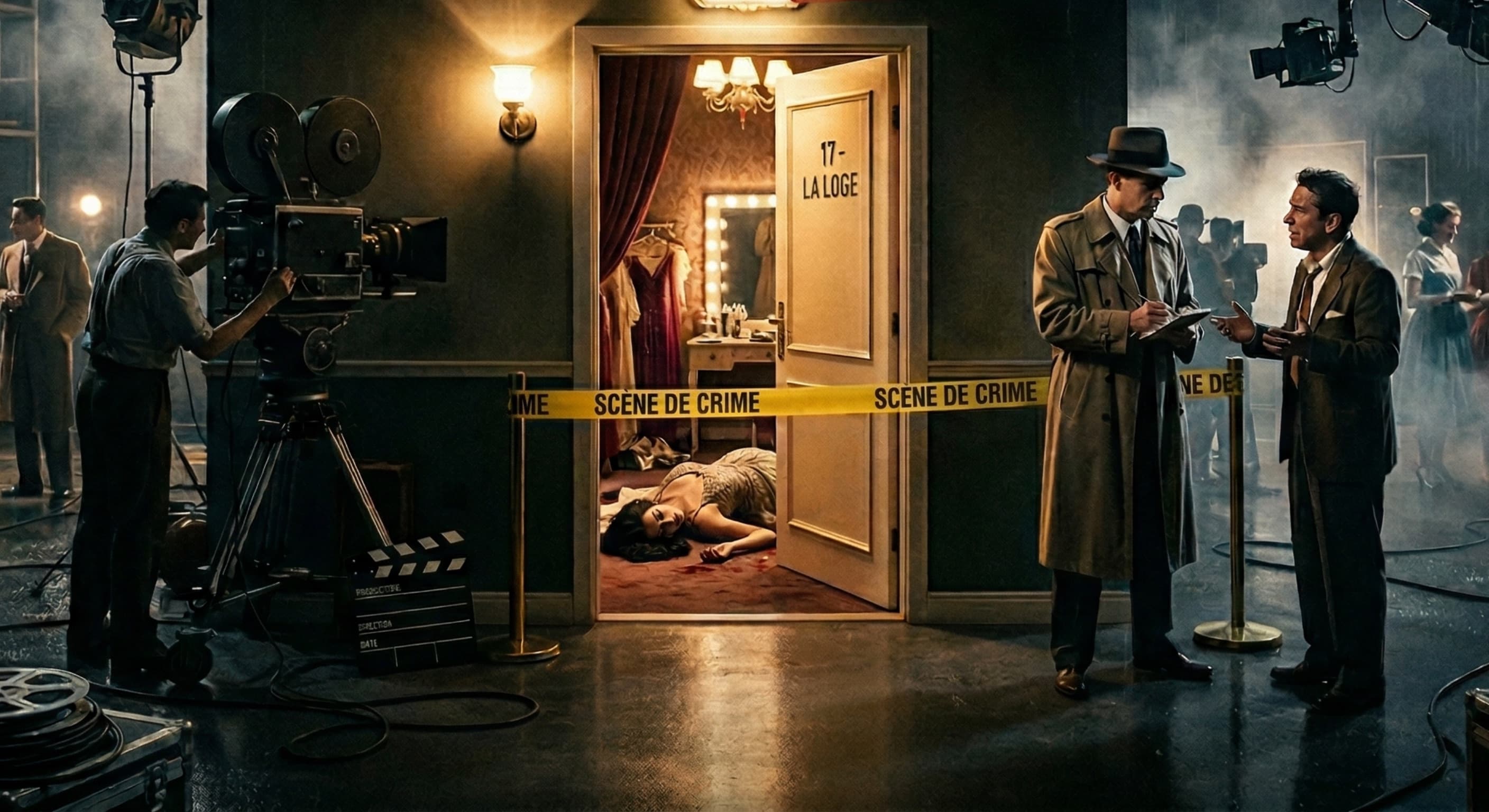
Small groups are not a compromise
There is a real advantage to playing with four to six people that larger parties cannot reproduce. Everyone hears almost everything. In a twelve player game, half the revelations happen in conversations you were not part of, and the reveal explains things you never witnessed. At five players, you are present for most of the story as it unfolds, which makes the solution feel earned rather than reported. Characters also get more depth, because a scenario written for five has to give each person substantial material rather than one secret and a name. The trade is atmosphere: you lose the crowded room, the sense of a party with strangers in it, and the pleasure of not being able to reach everyone. Whether that matters depends on your group. For a dinner with close friends, the small format is arguably the better one.
What changes when you drop below eight
Two mechanics shift. First, elimination becomes powerful. With five suspects, crossing off two leaves a one in three guess, so a scenario that relies on a wide suspect pool will collapse. Small group scenarios compensate by making the question harder than who did it: they add uncertainty about motive, method, or whether the death was even a murder. Second, private conversation stops being private. In a room of five, everyone notices when two people step aside, and the fact of the conversation becomes information in itself. Good small scenarios use this rather than fighting it, building in written notes, staged discoveries and information delivered by the host so not everything has to pass through face to face exchanges. If you take a twelve player scenario and simply remove seven characters, neither of these adjustments happens, which is why that approach disappoints. You end up with a thin suspect list and a plot that leans on conversations the missing characters were supposed to have.
Choose a scenario written for the count
This is the decision that determines whether the evening works. Buy a scenario whose stated player range includes your actual number near the middle, not at the edge. A kit listed for four to six players has been built with the elimination problem in mind and will hide its solution properly at five. A kit listed for eight to fourteen will not, however carefully you trim it. Check the player range on the product page before anything else, and only then consider the theme. Kits run from 39 dollars at the smaller player counts, which for five people is about six dollars each, still well below a comparable night out. Listings on /murder-mystery-kits state the supported range for every scenario. If your group is exactly two, stop here and look at /detective-case-files instead, since no party format works properly at that size.
Doubling roles without confusing anyone
If you have your heart set on a larger scenario, doubling is the workable adaptation. Each player takes two characters and switches between them, which sounds unwieldy and works better than expected with two rules. First, the two roles must be obviously different: different status, different voice, different relationship to the victim. A butler and a countess are easy to keep separate, two business partners are not. Second, give each player a physical signal for which character is speaking, a hat on or off, a scarf, a change of chair. That removes almost all the confusion for everyone else. Do not double the culprit with another role, since a player arguing with themselves creates problems the scenario cannot resolve. Doubling suits confident, playful groups and is genuinely fun for the right people. For a first time, a correctly sized scenario is the easier path.
Pacing a night for five players
A small game runs faster, so plan for around two hours rather than three. Two rounds of roughly thirty-five minutes usually beats three shorter ones, because with five people the conversations are longer and interrupting them mid-thread costs more than it gains. Keep the arrival period shorter too, fifteen minutes rather than twenty-five, since five people settle quickly. Serve food once, between the two rounds, as a proper break where everyone sits down together. The accusation phase is where small groups shine: with five players you can give each person two full minutes to lay out their case, which turns the ending into a real debate rather than a rapid poll. Then read the solution. Expect the post-game conversation to run long, because at this size everyone genuinely followed the whole plot and has opinions about the clues they misread. Leave room in the evening for that discussion rather than treating the reveal as the end of the night.
Space, seating and the at-home setup
A small group fits around a dining table, which changes the shape of the evening in a good way. Use the table as the base and let people get up when a conversation needs privacy. You need one additional space for stepping aside, a kitchen, a hallway, a second room, so that private conversations have somewhere to go. Put the clue documents at one end of the table where everyone can reach them rather than distributing them individually. Lighting still matters: lamps and candles over overhead light. Because you are only printing four to six character sheets, the whole kit comes to twenty pages or so, which is one quick printing session the night before. That low overhead is the quiet advantage of a small party. Less printing, less food, less setup, and an evening that starts on time because there was almost nothing to prepare.
Frequently asked questions
Can you do a murder mystery party with four people?+
Yes, with a scenario written for four to six players. Do not adapt a larger kit, because at four players the suspect pool is small enough that elimination alone solves it unless the plot was designed for that count. Check the stated player range before buying.
Does one of the five players have to be the host?+
Not necessarily. Some small group scenarios include the host as a playing character, others assume a neutral narrator. If your host plays, give them a role that is not the culprit, since they will already know the solution from reading the guide.
Is a small murder mystery party shorter?+
Usually, yes. Plan for around two hours of play rather than three. Conversations are longer but there are fewer of them, and the accusation round moves quickly with only five people to hear from, which leaves more time for the discussion afterward.
What if we want to invite more people later?+
Buy the kit that matches your current count and print for it. Because everything is an instant download you keep permanently, running a larger scenario later is a separate purchase rather than an upgrade, and the small one can be replayed with a different group of friends.