The timing problem nobody plans for
A murder mystery party runs two and a half to three hours with food in the middle. New Year's Eve guests arrive late, drink faster than usual and will abandon anything you are doing at 11:55 p.m. to find a glass of champagne and a television. If you start the game at 9 p.m. because that is when the last guest finally shows up, you will be handing out the third round of clues while half the room is already counting down. The solution is to pick your target for the reveal before you do anything else, then work backward in thirty minute blocks and write the schedule on a piece of paper taped inside a kitchen cabinet. Two targets work. Either the reveal lands at about 11:15 p.m., leaving a relaxed forty five minutes of celebration, or the reveal is the countdown itself. Both are good. What does not work is starting late and hoping. Print your character sheets and clue envelopes the day before, because on December 31st you will not have a free hour to deal with a printer.
Schedule A: reveal at 11:15, celebrate after
This is the safer of the two and the one most hosts should pick. Doors at 7:30 p.m. with a welcome drink and character sheets handed out as people arrive, with the instruction to read alone before talking. First act at 8:15 p.m. sharp, introductions in character, roughly twenty minutes. First investigation round from 8:35 to 9:15 over appetizers. Sit down for the main course at 9:15 and drop the second batch of clues at the table, which reliably turns dinner into the loudest part of the night. Second investigation round from 10:15 over dessert and coffee. Accusations from 10:50, one guest at a time, with everyone stating who they think did it and why. Open the solution envelope at about 11:10. That leaves forty five minutes for guests to argue about the clues they missed, which is genuinely one of the best parts of the evening, and to refill glasses well before the countdown. If your group is large, start each block ten minutes earlier than you think you need to.
Schedule B: the reveal is the countdown
The more ambitious version treats midnight as the final scene. You run the same structure shifted later, with accusations starting at about 11:40 and the host holding the sealed solution envelope until the last thirty seconds. Guests count down, and at zero you open the envelope and name the murderer instead of just shouting happy new year. Done well it is the most memorable New Year's party your friends will have been to. It also has two real risks. First, it requires your guests to stay engaged through the hardest hour of the night, which only works with a group that commits. Second, if anyone needs to leave before midnight, they leave without knowing the answer. Mitigate both by telling everyone the plan in the invitation, so guests arrive knowing that the ending is at midnight and that leaving early means missing it. Have a backup plan: if the room drifts by 11:30, do the reveal early and let the countdown be the countdown. A host who reads the room is worth more than a host who follows a schedule.
Themes that suit the last night of the year
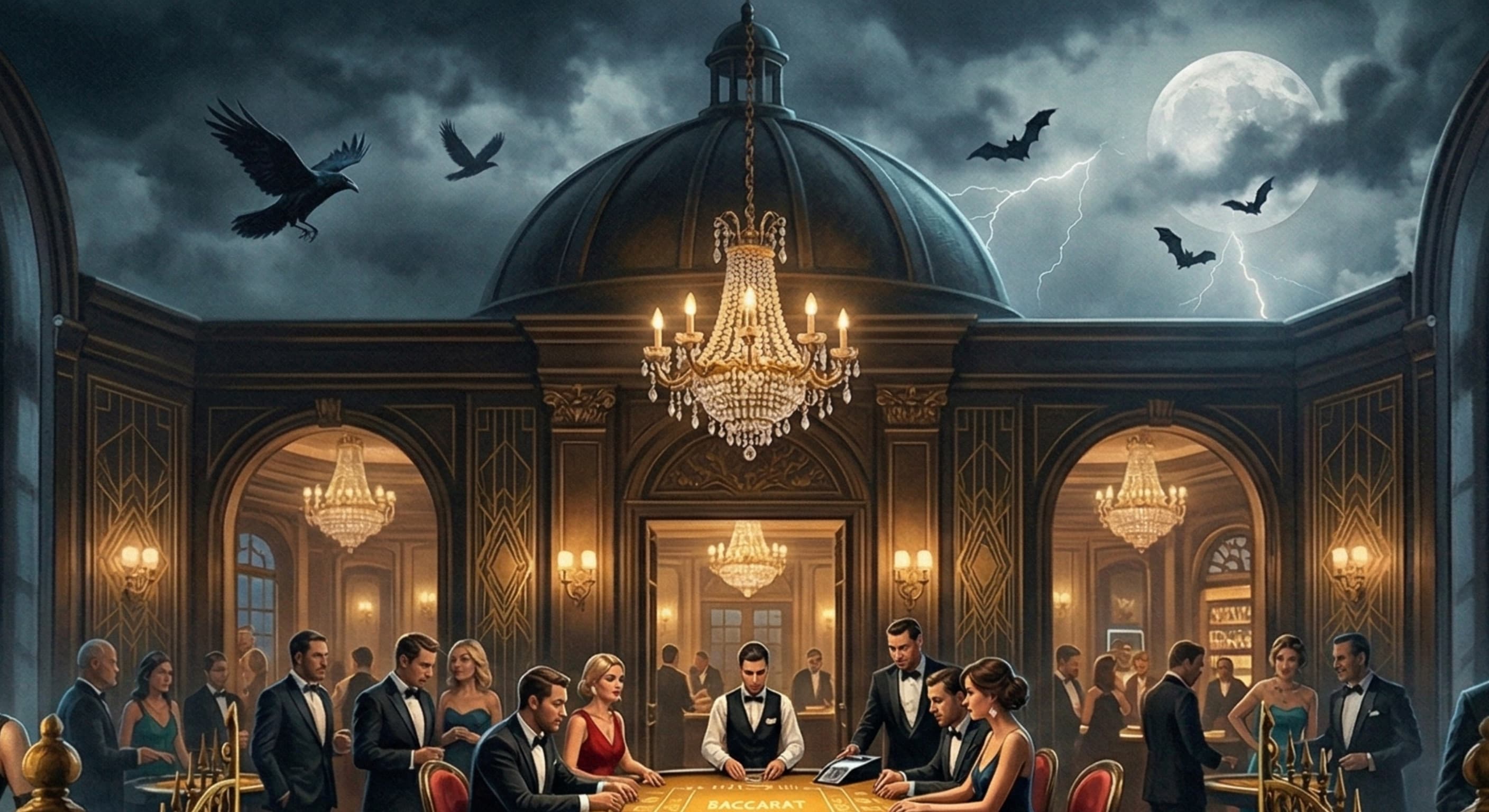
New Year's Eve rewards glamour, and the scenarios that work best are the ones where guests are already dressed for a party in the fiction as well as in real life. A casino gala where a high roller dies between the roulette table and the terrace is the obvious winner: black tie, cards, a champagne tower, and every guest has a plausible financial motive. A 1920s speakeasy on the eve of a raid gives you the same glamour with a little more grit. A grand hotel on the Riviera, a private yacht, or an art world New Year's party all give guests the same clean brief: dress as though you are somewhere expensive. Avoid anything requiring a costume that is hard to drink in, and avoid rustic or domestic settings, which fight the mood of the night. Whichever you choose, put the dress code in the invitation in plain words, because on New Year's Eve people are already planning an outfit and you want to influence it before they buy it. The scenarios on /murder-mystery-kits list the setting and the required player count up front.
Food, drink and the countdown itself
Drinking is the variable that ruins New Year's murder mysteries. Two adjustments fix it. Put real food in front of people early, at the 9:15 mark rather than at 10:30, and make it substantial rather than decorative. And batch your cocktails in pitchers so nobody is standing at a bar mixing drinks during an investigation round, which pulls two or three guests out of the game every time. Keep water on every table. For the countdown, decide in advance who is responsible for it and tell them, because the host will be busy with envelopes. Assign one guest to open the champagne at 11:50 and another to put the countdown on. If you are running Schedule B, put a phone timer on the table where you can see it. One small thing that pays off: hand out a blank accusation card at the start of the final round so each guest writes down their answer before anyone speaks. It stops the loudest person in the room from deciding the outcome for everyone else, and the cards are funny to read back on January 1st.
Late arrivals, early leavers and small groups
New Year's Eve guests double book more than on any other night, so plan for it. When you assign characters, give the two people most likely to arrive late the roles with the least critical information, so the game survives without them for the first twenty minutes. If someone has to leave at 11 p.m. for another party, hand them their character's secret in writing and let them pass it to another guest before they go. If your group ends up smaller than planned, which is common, you have two options: combine two characters into one guest, or switch to a smaller game from /printable-murder-mystery-kit. Kits run 39 to 59 dollars depending on the player count, and because everything is a PDF you download and print yourself, you can change your mind on December 30th and still be ready. For a group of two to six who want something calmer than a full party, a detective case file spread across a coffee table with a bottle of wine is a quietly excellent way to end the year.
Frequently asked questions
How long before midnight should the game start?+
Start the first act no later than 8:15 p.m. if you want the reveal at 11:15, or 8:45 p.m. if you are aiming the reveal at midnight itself. Write the block schedule down and stick it somewhere you can see it, because New Year's Eve runs late on its own without any help from you.
Should the reveal happen at midnight or before?+
Before, unless your group is the sort that commits fully to a bit. Revealing at 11:15 gives everyone forty five minutes to argue about the clues, refill glasses and get to the countdown relaxed. Revealing at midnight is more dramatic but punishes anyone who has to leave early.
What if guests have had too much to drink to follow the plot?+
Serve substantial food earlier than you think you need to, batch drinks in pitchers rather than mixing them individually, and keep water on every table. Choose a scenario with a straightforward motive rather than a complex financial conspiracy, and hand out written accusation cards so nobody has to hold the whole plot in their head.
Can we still do this if only four people show up?+
Yes. Combine two characters into one player, or pick a kit written for a smaller group. For four people or fewer, a detective case file is often the better fit: it is a table full of printed evidence for two to six players and takes about ninety minutes with no costumes and no hosting.