Why a casino gives you motive before the game begins
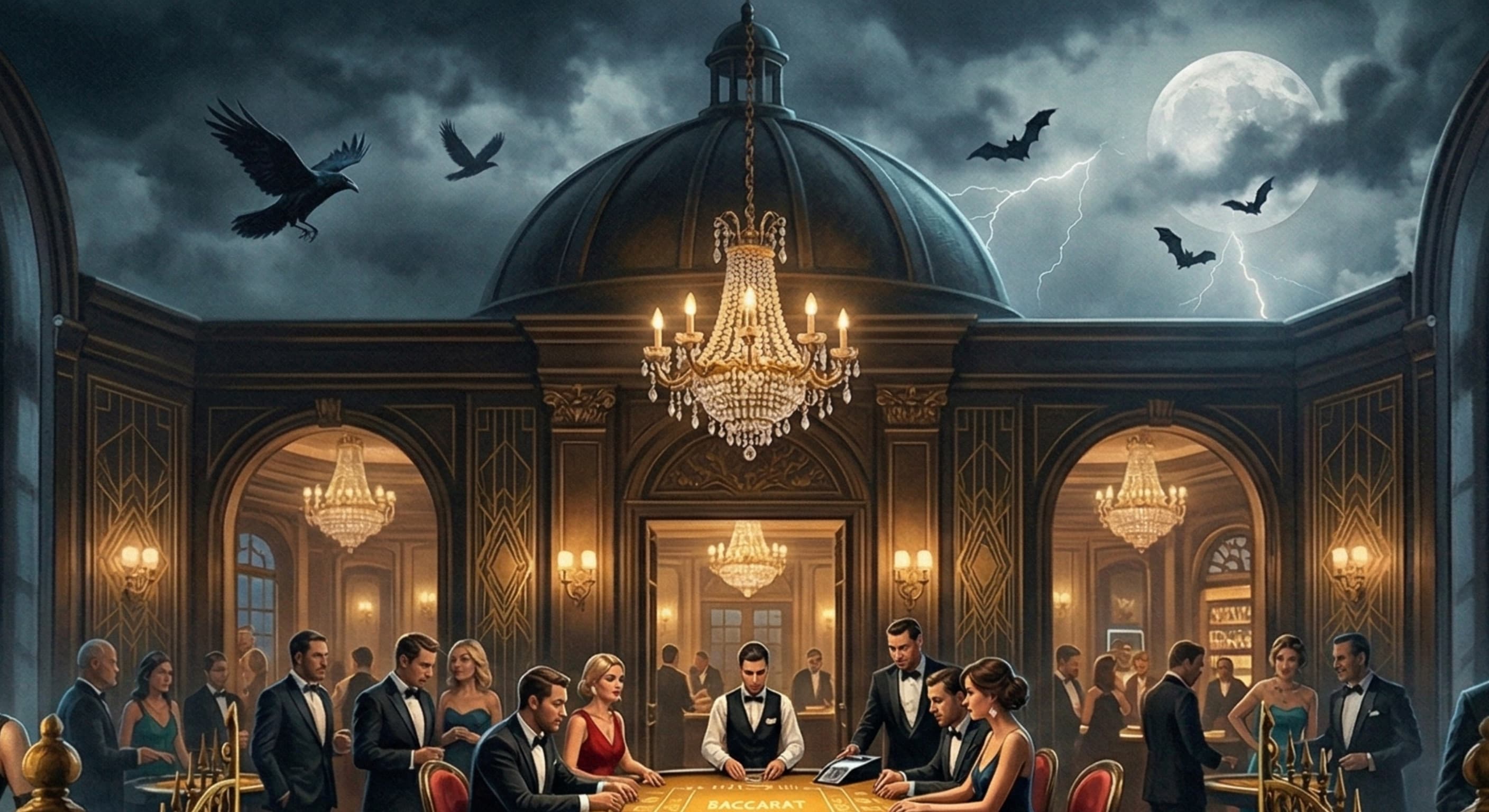
Most themes require you to explain why these particular people want something from each other. A casino skips that entirely. Debt is universally understood, instantly quantifiable, and gets worse by the hour. Tell a table that one character owes another eighty thousand dollars and the room needs no further briefing to understand the danger. The setting also justifies secrecy in a way few others do. People at a private gaming table have obvious reasons to hide their finances, their identity, and who they arrived with, so the usual awkwardness of players wondering why they should not simply tell the truth disappears. Add a house that keeps records, a manager who decides who gets credit, and a cashier who knows exactly how much everyone is worth tonight, and you have three characters with information every other player desperately wants. That is the engine of a good evening: not clues hidden under furniture, but information that other human beings will only trade for something.
Black tie is the easiest dress code you can set
The casino theme wins on costume simplicity. The instruction is one sentence: dress like you are being photographed on the way in. Dark suits, ties or bow ties, and polished shoes for some, long dresses, jewelry, and a clutch for others, all of which most adults can manage from existing wardrobes. It is a rare theme where guests can wear something they actually own and still feel completely in character. Give the staff roles a clear uniform so the room reads correctly: a white shirt with a black waistcoat for dealers, and a dark jacket with an earpiece prop for security. If you want to push it, add a visor or sleeve garters for the dealer, which are cheap and read instantly. One detail matters more than the clothes: give every player something that represents money. A bundle of chips, a marker, a signed IOU. People behave differently when holding a physical stake, and the entire theme depends on that behavior.
Building a gaming room on a small budget
Two tables are enough for a convincing casino. Cover one in green felt, which costs a few dollars a yard at any fabric store and folds away afterward, and put a deck of cards and a chip tray on it. Cover the second in a dark cloth for drinks and clues. Buy a cheap set of plastic chips, or print your own denominations on card, and give every character a different starting stack so wealth is visible across the room. Light the tables from above and leave the corners dark, which is exactly how real rooms are lit and keeps groups clustered where the action is. Add a velvet rope made from a curtain tie, a printed sign with a house name, and a guest list at the door held by whoever plays security. Print house rules, credit slips, and a ledger page from the kit on heavy paper. Skip slot machine imagery, which is modern and noisy, and keep everything green, gold, and low lit.
Music, noise, and the sound of a room with money in it
A casino is louder than a manor and quieter than a nightclub. The right background is a small combo, piano and bass, or vocal jazz at a level people talk over comfortably. Under it, if you want, a very quiet loop of low murmur and chips clicking, which fills gaps without drawing attention. What matters more than the playlist is the sound the room makes on its own. Real chips stacked and pushed across felt are the single best audio prop available, and they cost almost nothing. Ask players to handle their stacks while they talk. Use a distinct sound to mark round changes, a bell at the cashier window or a dealer calling the table closed, so the structure of the night feels like part of the world rather than a host clapping for attention. Keep volume low enough that a whispered conversation in a corner is genuinely private, because private corners are where a casino scenario does its best work.
The plots that suit a high stakes night
Three engines carry almost every good casino mystery. The first is the marker, an unpayable debt coming due tonight, with the deadline stated in the opening passage so pressure exists from minute one. The second is the fix, a rigged game, a bought dealer, a counted deck, which turns skill into a crime and gives a technical layer to investigate. The third is the skim, money quietly leaving the house, which puts management and staff under suspicion alongside the players. Combine two of them and you have a plot with layers that resolve at different times. Physical evidence is easy here: a torn credit slip, a ledger with a corrected entry, a chip from a different house found in the wrong pocket, a security log with five missing minutes. Hand players objects rather than descriptions whenever possible. The scenarios on /murder-mystery-kits built around gambling use this structure, and the format also works well as the centerpiece of an adult celebration described on /murder-mystery-birthday-party.
Mistakes that empty the table
The biggest is running real games for real stakes alongside the mystery. Two competing activities means guests choose one, and cards always win because they have a faster feedback loop. Let the games be atmosphere, played casually and abandoned mid hand when someone has a question to ask. The second mistake is uneven starting wealth without a reason, which leaves some players with nothing to trade and therefore nothing to do. Every character needs at least one asset, even if it is only information. The third is letting the house be omniscient, since a security camera that saw everything ends the investigation in ten minutes. Decide early what the cameras missed and why. The fourth is glamour without grit, because a casino where nobody is desperate is just a party in nice clothes. At least two characters should be genuinely in trouble. The fifth is forgetting to cash out, so plan a closing moment where debts are settled publicly, since it makes the accusation round far more satisfying.
Frequently asked questions
Do guests need to know how to play poker or blackjack?+
No. The card games are background texture, not a requirement. Deal a loose hand of blackjack, which takes thirty seconds to explain, and let people wander away from it. If nobody wants to play at all, the chips and the felt still carry the setting on their own.
Should we gamble with real money?+
We recommend against it. Real stakes pull attention away from the mystery and can sour the mood if someone loses more than they expected. Play with chips that represent in character wealth instead, which keeps the tension in the story rather than in anyone's wallet.
How many players does a casino theme need?+
Eight to fourteen is ideal, since you want gamblers, staff, and management all represented. Below eight, cut the security and cashier roles and give their information to a single floor manager character. Kits cost 39 to 59 dollars depending on the player count.
What era should a casino murder mystery party be set in?+
The early 1960s is the most forgiving choice. The clothes are familiar, there are no phones or cameras to explain away, and the atmosphere is instantly recognizable. A modern setting works too, but you will need a clear reason why nobody simply checks the footage.