Why a laboratory is a natural crime scene
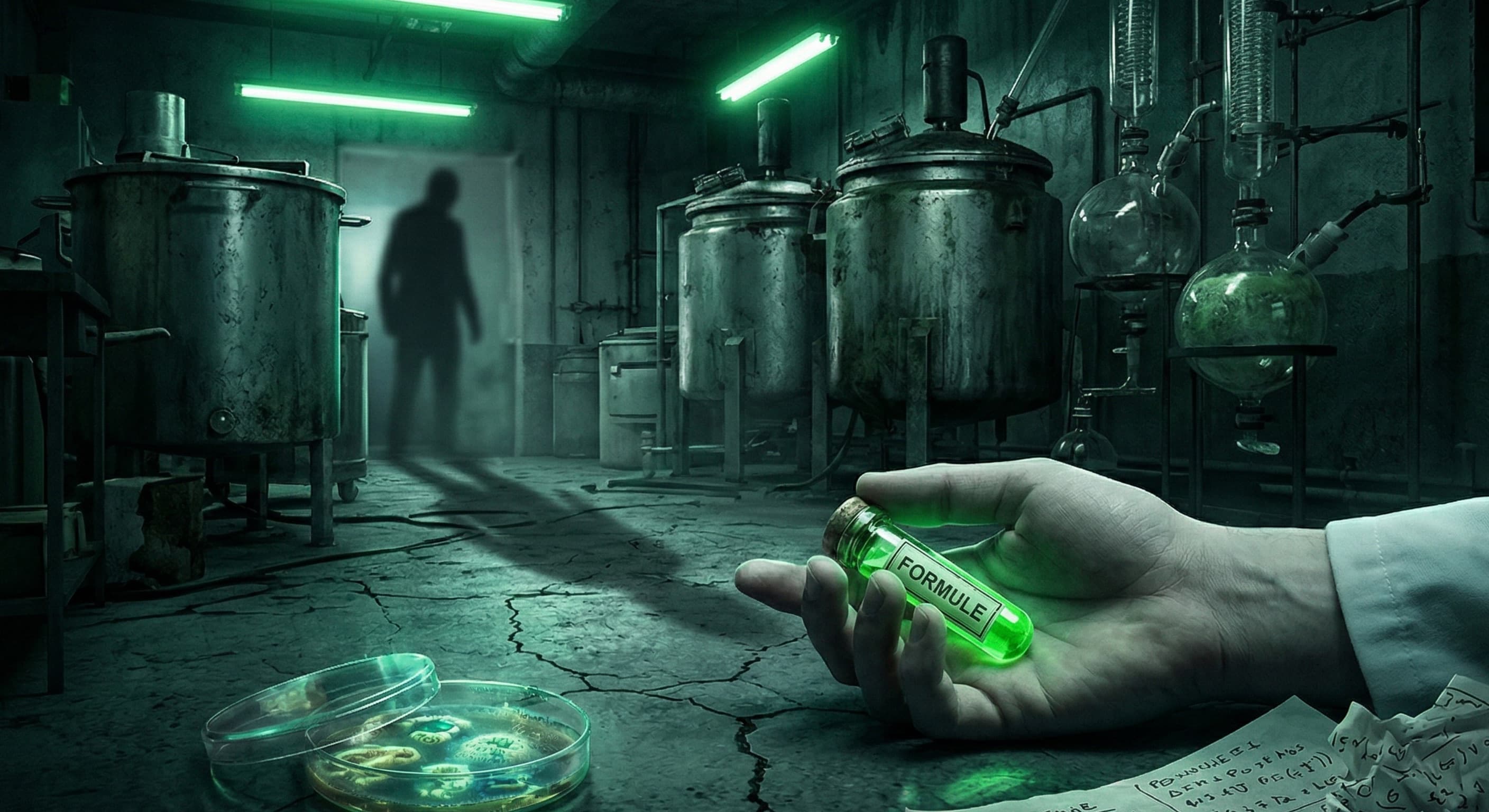
Three features make the setting work. First, a lab justifies a physical lockdown better than almost any other location, since a containment protocol, a contamination alarm, or a sealed floor explains why nobody leaves without any strain on the story. Second, the people inside are trained observers, which flips the usual dynamic: instead of amateurs guessing, you have specialists who can each analyze one piece of the puzzle and must therefore cooperate to see the whole. That produces genuinely collaborative play. Third, the motives are unusually clean. Authorship, funding, patents, and priority are real things people destroy each other over, and a guest does not need any scientific background to understand that someone stole a colleague's work. The setting also solves the clue problem elegantly, because a lab naturally contains documents worth reading: logbooks, sample labels, access records, printouts. Those are exactly the props that make an investigation feel like an investigation rather than a conversation.
Costumes: the cheapest dress code available
A white coat is the entire costume, and a plain white shirt worn open over dark clothing is an acceptable substitute for anyone who does not have one. Real lab coats are inexpensive, and a set of five or six becomes a reusable prop for future parties. Add an ID badge on a lanyard for every character, printed with a name, a photograph, and a clearance level, and you have both a costume and a plot device, since access levels immediately explain who could have been where. Safety glasses, gloves, and a clipboard finish the look. Vary the roles visually so the room is readable: white coats for researchers, a suit for the director or the investor, dark clothing for security, a maintenance uniform or coveralls for a technician. If you want a specific era, the late 1970s is an excellent choice, because it removes digital records from the plot and the aesthetic is instantly recognizable in photographs.
Building a lab on a kitchen table
The look is clinical, cold, and cluttered with equipment. Use white and steel: a white tablecloth, foil, metal trays, and any stainless bowls you own. Glassware is the real trick, since a row of bottles, jars, and vases filled with water and tinted with food coloring reads as a laboratory from across the room, especially with a small light behind them. Label everything with printed or handwritten labels bearing a specimen number and a date. Add a clipboard on a hook, a stack of printouts, a wall chart, a whistle or a bell as an alarm, and warning tape across one doorway. Lighting should be cooler than in your other themed parties, so use plain white bulbs rather than warm ones, and keep it bright because the contrast with the usual candlelit mystery is part of the atmosphere. Everything on the table should look like it belongs to the work rather than to a party, including the drinks.
Sound and the alarm you use once
This theme uses sound sparingly and to great effect. The background should be a low mechanical hum, ventilation, a fridge, a faint electrical tone, which makes the room feel enclosed and slightly wrong. Avoid music almost entirely, since a playlist makes the space feel social and the whole point is that this is a workplace after hours. Your one effect is the alarm. A single loud tone at the moment of lockdown, followed by silence, is worth more than an hour of ambient sound, and repeating it once at the reveal closes the evening perfectly. A recorded announcement over a speaker, even one read by a friend into a phone, delivers exposition in a way that feels part of the world rather than a host reading aloud. Keep the alarm short and warn any guest who might find sudden loud noises difficult, since this theme has more potential for genuine startle than most.
Plots about credit, funding, and results
The best laboratory mysteries are about ownership of an idea. A paper submitted with a name missing from it. A result that cannot be reproduced and a colleague who knows why. A funding review next week that will close one project and save another. A sample that was removed from the building and sold. Those motives are precise enough to argue about and require no technical knowledge from the players. Put an outsider in the room, an investor, a regulator, or a journalist, because someone who does not speak the internal language forces the specialists to explain themselves, which is how the audience learns the plot. Use access records and logbooks as your spine, since a timeline of who entered which room at what time is the most satisfying puzzle this setting offers. Scenarios structured this way are on /murder-mystery-kits, and for one or two investigators the document based cases on /detective-case-files cost 39 dollars and require no host.
The mistake that makes a science theme feel like homework
The trap is real science. A scenario that requires players to understand a chemical process, perform a calculation, or interpret genuine data stops being a party and becomes a test, and the guests who cannot follow it disengage within minutes. Keep the science as texture and the reasoning as human. Nobody should need to know what the compound does, only that two people both claim to have discovered it. The second mistake is over-explaining the premise, since a five minute briefing about the research program loses the room. State the discovery in one sentence. The third is letting the theme go too cold, because a clinical room with no warmth can feel unwelcoming, so keep the food and drink good and human even as the decor stays sterile. The fourth is horror creep. Adding a mutation, an escaped specimen, or a contagion turns deduction into survival, and the moment a monster is possible, the players stop investigating the people.
Frequently asked questions
Do my guests need any scientific knowledge?+
None. A good laboratory scenario keeps the science as background and puts the deduction in human motives such as credit, money, and jealousy. If any clue requires actual technical knowledge to interpret, it is written badly and should be rewritten in plain language.
What era works best for a lab setting?+
The late 1970s or early 1980s is the most practical choice, because it gives you paper logbooks, keycards without full digital tracking, and a strong visual identity. A modern lab works too, but you will need to decide early what the security cameras did not record and why.
How do I keep it from turning into science fiction?+
Keep every element in the room something that could exist today, and make sure the culprit is a person with an ordinary motive. The moment a mutation, a contagion, or an artificial intelligence is on the table, players stop investigating each other and the mystery stops working.
Is this theme suitable for teenagers?+
Yes, and it tends to land well with groups who enjoy puzzles. The costume is a white coat, the setting is familiar from school and television, and the motives, which are credit and competition, are entirely understandable at that age. Keep the tone tense rather than gory.