Why Halloween and murder mysteries fit together
Costume parties have a structural problem: everyone puts real effort into an outfit, arrives, gets complimented for ten minutes, and then stands around exactly as they would at any other party. The costume has nowhere to go. A murder mystery gives it somewhere to go. Suddenly the guest dressed as a widow is the widow, with a motive and an alibi, and the costume becomes the first line of a character rather than the whole performance. Halloween also gives you permission to commit to atmosphere in a way that feels excessive in June. Candles everywhere, a fog of incense, a soundtrack that would be unbearable at a birthday, a house with half the lights off. None of it looks like too much on October 31st. Finally, the date does your invitation work for you. Nobody needs convincing to show up. Pick a scenario with a gothic or haunted setting from /murder-mystery-kits and the theme, the costumes and the lighting all point the same direction without any effort from you.
Four Halloween themes that hold up
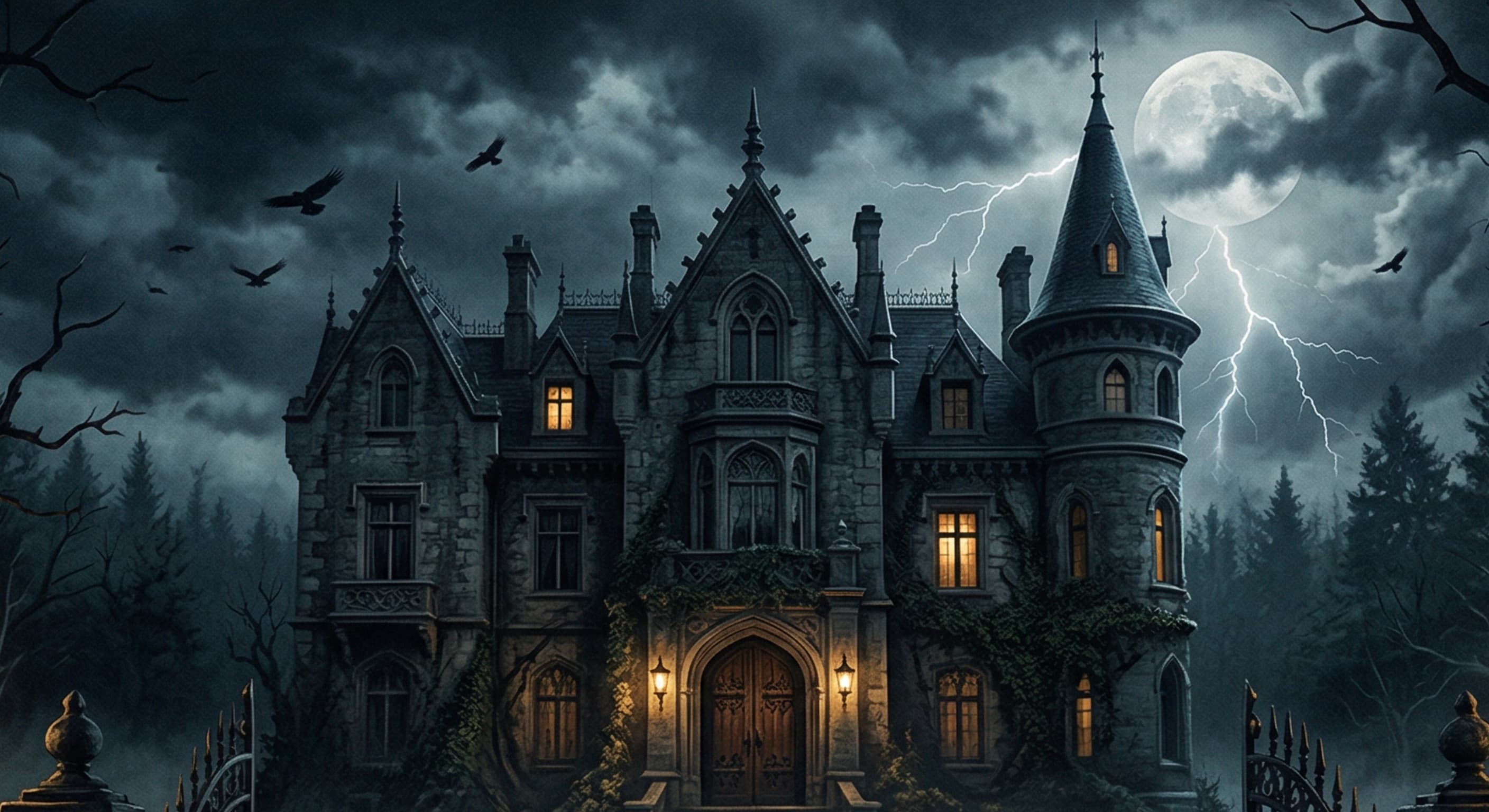
A cursed manor is the classic and the safest bet: an old family, a reading of the will, a storm outside, and a body in the library. Costumes are easy because anything vaguely formal and vintage works. A seance gone wrong gives you a medium, a skeptic, a grieving widow and a very good reason for the lights to go out at a specific moment. An asylum or sanatorium scenario is atmospheric but be careful with it, since it can land badly with guests who have any personal connection to mental health care; a haunted hotel is the same mood with none of the risk. A witch trial set in a small New England town in 1693 is the most theatrical option and gives every guest a genuinely tense role, because everyone is accusing everyone. Whatever you choose, write the setting into the invitation in two sentences. Guests who know the year and the place will show up dressed correctly. Guests who only know the word Halloween will show up as a hot dog.
Costume instructions that guests will actually follow
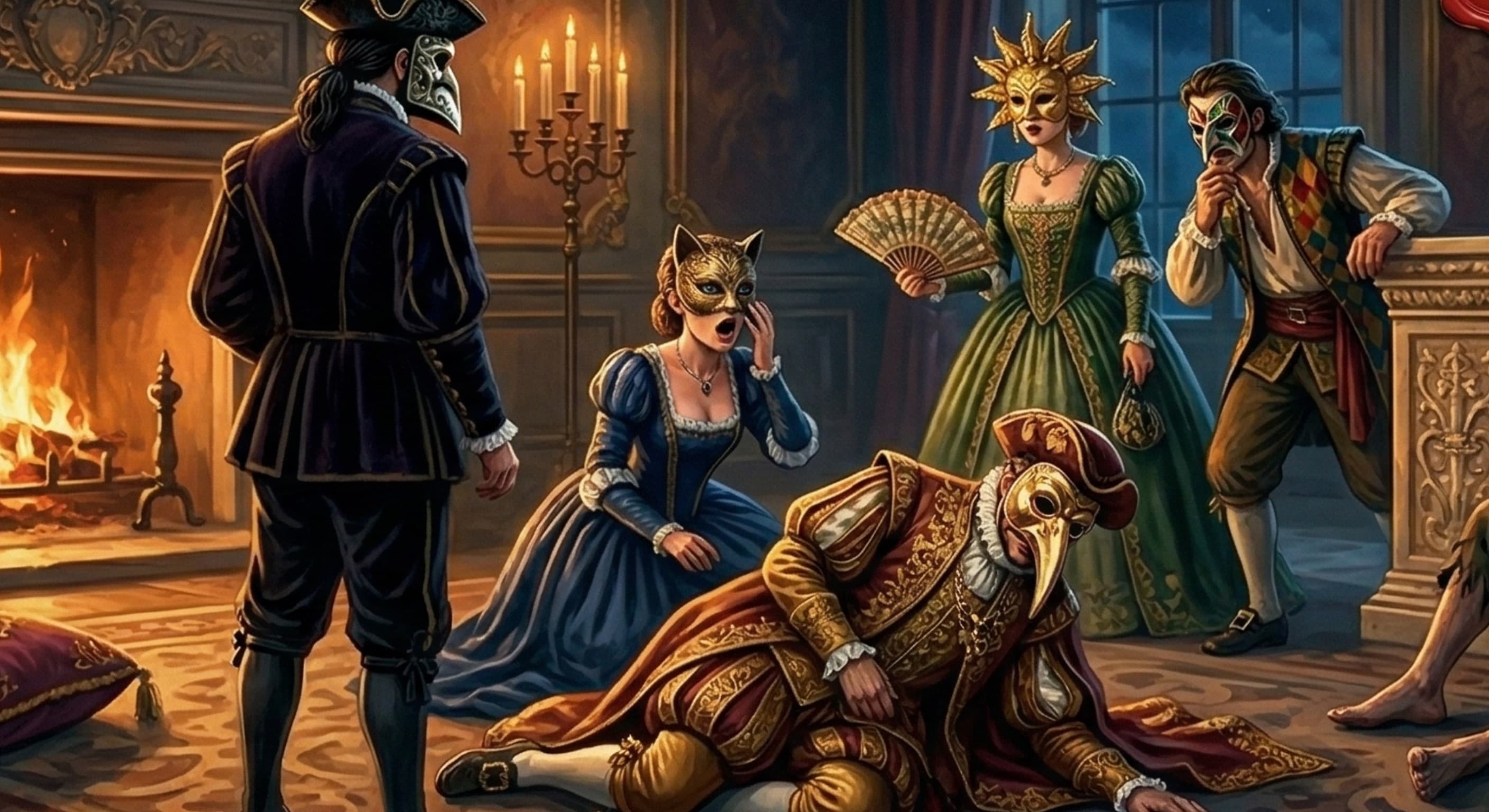
The mistake is asking for costumes. The fix is assigning them. When you send out character names two weeks ahead, add one line describing what that person wears: the family lawyer in a dark three piece suit, the traveling spiritualist in layered shawls and too much jewelry, the groundskeeper in muddy boots and a heavy coat. That single sentence does more than any Pinterest board, because it converts an open ended creative task into a shopping list. Set a floor, not a ceiling. Tell guests that the minimum is one item plus dark clothing and that anything beyond that is a bonus. This keeps the guest who forgot from feeling excluded, and it stops anyone from spending real money. Keep a box by the door with spare hats, shawls, glasses and a few pieces of costume jewelry for exactly that guest. Two useful rules: nothing that covers the face for the whole evening, because the game depends on reading expressions, and nothing that makes it hard to hold a drink and a clue at the same time.
Lighting, sound and the smell of the room
Atmosphere is three senses and most hosts only work on one. For light, turn off every overhead fixture in the playing area and work with lamps, candles and one or two colored bulbs. Amber and deep red read as warm and old; blue and green read as cold and wrong, which is useful for a single room you want guests to feel uneasy in. Put real or battery candles at different heights rather than all on the table, because a room lit at one level looks flat. For sound, build a two hour playlist of low, textural music with no vocals and no sudden stings, and set it quiet enough that guests have to lean in to talk. Silence between tracks breaks the spell, so cross fade if your player allows it. For smell, which almost nobody does, burn a single candle with woodsmoke, clove or old library notes. Guests will not consciously notice it and they will all describe the house as feeling different. Cold rooms feel more ominous than warm ones, so turn the heat down a couple of degrees before people arrive.
Food that fits the theme without fighting the game
The practical constraint is that your guests need at least one hand free at all times and will be moving between conversations. That rules out anything requiring a knife and fork during the investigation rounds. Build a menu of things people can eat standing up: a soup served in mugs, hand pies, a cheese and charcuterie table, spiced nuts, anything on a skewer. Serve one substantial thing sitting down, between acts, so there is a natural break where everyone gathers and you can drop the next set of clues. Theme the food with names rather than with food coloring. A tray labeled the groundskeeper's last supper gets more laughs than green frosting and takes ten seconds. For drinks, one signature cocktail and one non alcoholic version of the same thing, both batched in a pitcher, saves you from playing bartender all night. Put the food table in a different room from the clue table so guests keep circulating between them, which is free choreography.
Running it on a weeknight, which Halloween often is
Halloween lands midweek often enough that this matters. A full murder mystery runs two and a half to three hours and that is a hard sell on a Wednesday with work in the morning. Two adjustments make it work. First, start earlier than feels natural, with doors at 6:30 p.m. and the first act at 7 p.m. sharp, and say so on the invitation in those words. Second, choose a scenario with fewer players and fewer rounds, or run the three round version rather than the five round version if your kit offers both. You can also run the party on the Saturday before, which most guests will thank you for. If a weeknight is genuinely your only option and you want something shorter, a printable case file from /detective-case-files is the compact alternative: two to six players, a table full of documents, ninety minutes, and no costumes required. It is a good fallback for a small group who want the mystery without the production. Everything is a PDF you download and print yourself, so either choice is ready the same evening.
Frequently asked questions
Do guests have to wear costumes?+
It works much better if they do, but you should never make it a requirement. Assign each guest one costume element tied to their character and tell them the rest is optional. Keep a box of spare hats, shawls and jewelry by the door so anyone who arrives in street clothes can be in character within a minute.
Is a Halloween murder mystery too scary for kids?+
A gothic manor scenario is atmospheric rather than frightening, and most children over about ten enjoy it. Skip anything involving seances or graphic descriptions if younger children are present, keep the lights a little higher than you would for adults, and give kids paired roles so they investigate with a partner.
How many people do I need?+
Six to sixteen is the comfortable range for a full party. With a smaller group, pair guests on a single character or choose a detective case file instead, which is built for two to six players around one table. With a very large group, add non speaking party guest roles who vote on the accusation.
When should I send the invitations?+
Three weeks before Halloween, because your guests are being invited to other parties on the same night and the first invitation usually wins. Include the date, the start time, the setting in one or two sentences, and their character name with its costume line. Send the character sheets themselves a few days before so nobody loses them.