Why a spy setting plays differently from a classic mystery
In a standard murder mystery party, most characters are broadly honest people with one thing to hide. In a spy scenario, deception is the job. That changes the texture of every conversation, because players stop asking whether someone is lying and start asking what a particular lie is for. It also means information becomes currency in a much more literal sense, and players will bargain, trade, and betray each other over documents in a way they rarely do in a manor. The setting supports mechanics no other theme handles as naturally: dead drops, code words, a cipher two characters share, sealed envelopes that may only be opened under a stated condition. Those small systems give structure to a group that might otherwise stand around talking. The tradeoff is that a spy night needs a firmer hand from the host, because a room where everyone distrusts everyone can stall. Your job is to keep information moving, which the round structure in a good kit handles for you.
The look: 1960s functional, not a tuxedo
Cinema has trained everyone to imagine a dinner jacket, but the field look is far easier and far more atmospheric. Trench coats, dark overcoats, plain suits in gray or brown, narrow ties, and hats. For women, a belted coat, a headscarf, a shift dress, gloves, and dark glasses. Plain is the point: these are people trying to be unmemorable. Diplomatic and station chief characters can dress up, so one or two guests in formal wear give you visual contrast without demanding it from everyone. Add the props that matter more than the clothes: a briefcase, a folded newspaper, a hotel key, a pair of glasses, a lighter, an identity card printed with a photograph. Ask guests to carry something. A spy with empty hands looks like a guest, while a spy with a briefcase they never put down looks like a story. Set the bar low in the invitation, because a coat and a serious expression is a complete costume for this theme.
Decor: a safe house, not a set
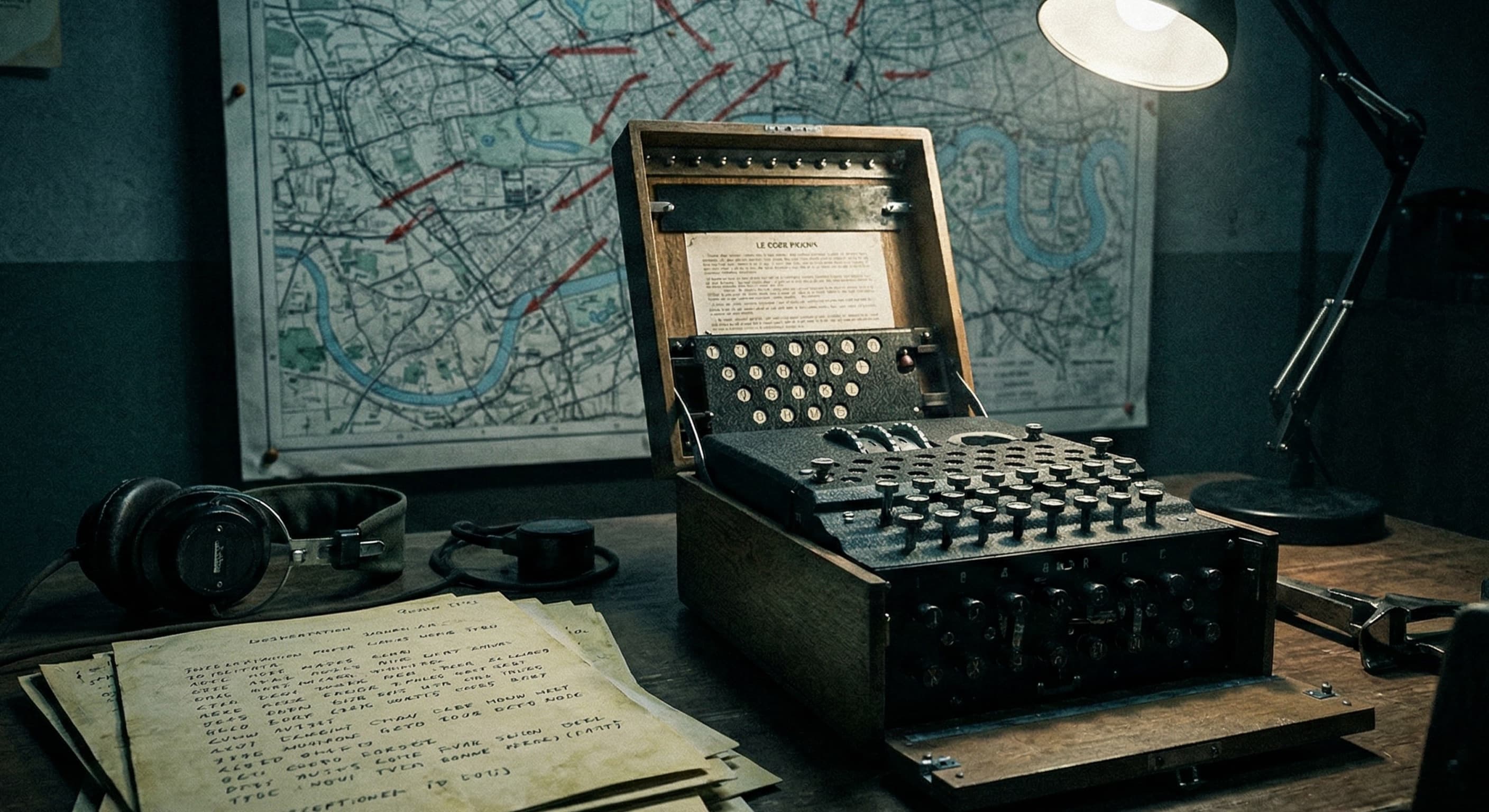
Cold War atmosphere is achieved through emptiness rather than decoration. Strip the room rather than fill it. Remove the soft touches, push the chairs into functional positions, put a single lamp on a table and point it at the middle of the room. Grey, olive, and brown. A map on the wall with pins and string, a wall clock, a typewriter if you can borrow one, a reel to reel or a radio, and a stack of manila envelopes and folders marked with a classification stamp. That stack of folders is the most valuable prop in the whole theme, and you can make it for the price of paper and a rubber stamp. Consider two spaces if your home allows it: one warm public room, a bar or a cafe, and one cold back room for private meetings. Moving between them gives players somewhere to conspire. A window with a curtain someone keeps checking is worth more than any amount of decoration.
Codes, drops, and props that actually do something
This is the theme where interactive props earn their place, because they carry information rather than atmosphere. A simple substitution cipher with the key held by two characters gives you a document only part of the room can read. A dead drop is just a taped envelope under a chair, and telling one player where it is creates ten minutes of genuine tension. A code phrase and counter phrase allows two players to identify each other safely, which is one of the most enjoyable moments the format offers. A briefcase that changes hands three times during the night, contents unknown to most of the room, will be discussed for the rest of the evening. Keep every puzzle solvable in about two minutes, since a cipher that takes twenty minutes stops the party dead. The point of these devices is to create private knowledge, not to test anyone's cryptography. Scenarios with this structure are available on /murder-mystery-kits, ready to print at home.
The plot: a mole, a defector, and a list
The classic engine is the mole hunt. Somebody in this room is working for the other side, a network has been rolled up, and the person who died was about to name the leak. That premise creates the correct dynamic, since every character has a reason to investigate and a reason to obstruct. Add a defector who wants out and has made a list of names their price, and a handler who has been running an agent without authorization. The most satisfying version has more than one traitor, so that the obvious answer is true but incomplete. Give at least two innocent characters behavior that looks damning, such as an unexplained absence or a payment from an unknown source, so that suspicion distributes properly. Keep the sides clearly labeled even if loyalties are not, because a room that cannot remember which agency each character works for cannot reason about motive. The competitive and negotiated structure of this theme also makes it a strong choice for the corporate format described on /murder-mystery-team-building.
Keeping paranoia from stalling the evening
The failure mode of a spy party is a room where nobody will tell anybody anything, and the investigation grinds to a halt by round two. Prevent it structurally. Give every character at least one piece of information they are explicitly instructed to trade away during the first round, which forces early contact. Give two or three characters a genuine ally whose sheet confirms it, since alliances that hold create the trust needed for information to circulate. Use round changes to push new documents into the room, and if conversation stalls, deliver an envelope to the quietest player. Second, keep the historical background light. Guests do not need a briefing on Berlin in 1963, and a host who over explains the politics loses the room in the first ten minutes. Three sentences of context are enough. Third, resist adding physical challenges like lockboxes with combination locks, which sound exciting and reliably consume half an hour that the conversation needed.
Frequently asked questions
Do guests need to know Cold War history?+
Not at all. Everything they need should be on their character sheet, and three sentences of context in your opening passage covers the rest. The emotional logic of the setting, which is that nobody can be trusted, is instantly understood without any historical knowledge.
Are the codes and ciphers too difficult for a party?+
Only if you make them so. Keep every puzzle solvable in about two minutes by one person, and always give a second route to the same information through another character. Codes should create private knowledge and small victories, never bottlenecks that stop the game.
Can a spy theme work for a corporate event?+
Yes, and it is a strong option. The negotiation, information trading, and alliance building map directly onto the skills a team event is trying to exercise, and the costume requirement is a coat rather than anything anyone would feel silly wearing at work.
What group size suits a mole hunt?+
Eight to fourteen. You need enough characters for at least two agencies plus a few civilians caught in the middle, but not so many that private conversations become impossible to track. Kits cost 39 to 59 dollars depending on the number of players they cover.