Start with light, because nothing else comes close
Turn off the ceiling light. That single action transforms a room more than any decoration you could buy, because overhead lighting is the most modern, least atmospheric light there is. Replace it with lamps at eye level or lower, and use as many as you can gather, including ones carried in from bedrooms. Aim for three or four warm pools of light rather than one bright room, since pools of light create corners where two people can have a private conversation, and private conversations are the entire mechanic of the evening. Candles on the table, real or battery, add movement that a bulb cannot. If your only lamps are cold and white, drape a thin scarf over the shade, keeping it well clear of the bulb, or swap in a warm bulb for the night. Dimming the room also makes guests far less self-conscious about being in costume, which raises participation measurably.
Shop your own house before you shop anywhere else
Walk through every room with a basket and collect anything that reads as old, formal, or out of place in daily life. Candlesticks, a tray, glass decanters, a pocket watch, an old book with a cloth cover, a hand mirror, a wooden box, a hip flask, a fountain pen, a deck of cards, a chess piece, a suitcase, a hat. Take anything visibly modern out of sight instead: chargers, remote controls, the plastic laundry basket, the cereal box on the counter. Removing ten modern objects does more for the period feel than adding ten old ones. Then look at fabric. A dark tablecloth, a folded throw over a bright sofa, or a sheet over a bookshelf full of contemporary paperbacks changes the whole read of a room in two minutes. This is the entire method, and it costs nothing at all. Do the whole sweep the day before, since it takes twenty minutes and cannot be done while guests are arriving.
The table is your set, so build it first
Wherever the group will gather is the one surface worth real effort. Use your best tablecloth or any plain dark fabric, then layer: candlesticks down the center, a small vase with whatever is in the garden, and glassware that does not match, which reads as period rather than as a mistake. Put out place cards with character names, handwritten on folded card, which is the single highest-impact five-minute job in the whole setup because it tells every guest where to sit and who everyone is. Leave a clear space in the middle for clue documents, since players will want to spread them out and compare. Keep drinks off that space by giving everyone a coaster. If your kit includes printed badges or invitations, put one at each place. Printing details are covered on /printable-murder-mystery-kit if you are laying out the materials for the first time. Lay the table the night before and cover it with a sheet if you need the surface during the day.
One prop per area beats a shelf of clutter
A single deliberate object in each part of the house does more than a crowded table of theme items. In the hall, a coat stand with an old hat and a scarf. In the kitchen, a tray of glasses and an ice bucket rather than the bottles in their supermarket packaging. In the corner of the main room, an open suitcase with clothes half-packed, which suggests someone was leaving in a hurry and invites a guest to invent a theory. On a side table, a single letter left folded and unread. The logic is that props are conversation prompts, not scenery. One object a guest can pick up and ask about is worth ten they walk past. Keep the number low, and make sure none of them accidentally look like an official clue from the kit, which causes real confusion mid-round. A guest who invents a theory about your half-packed suitcase is already playing the game before the first round has even begun.
The crime scene corner, done in ten minutes
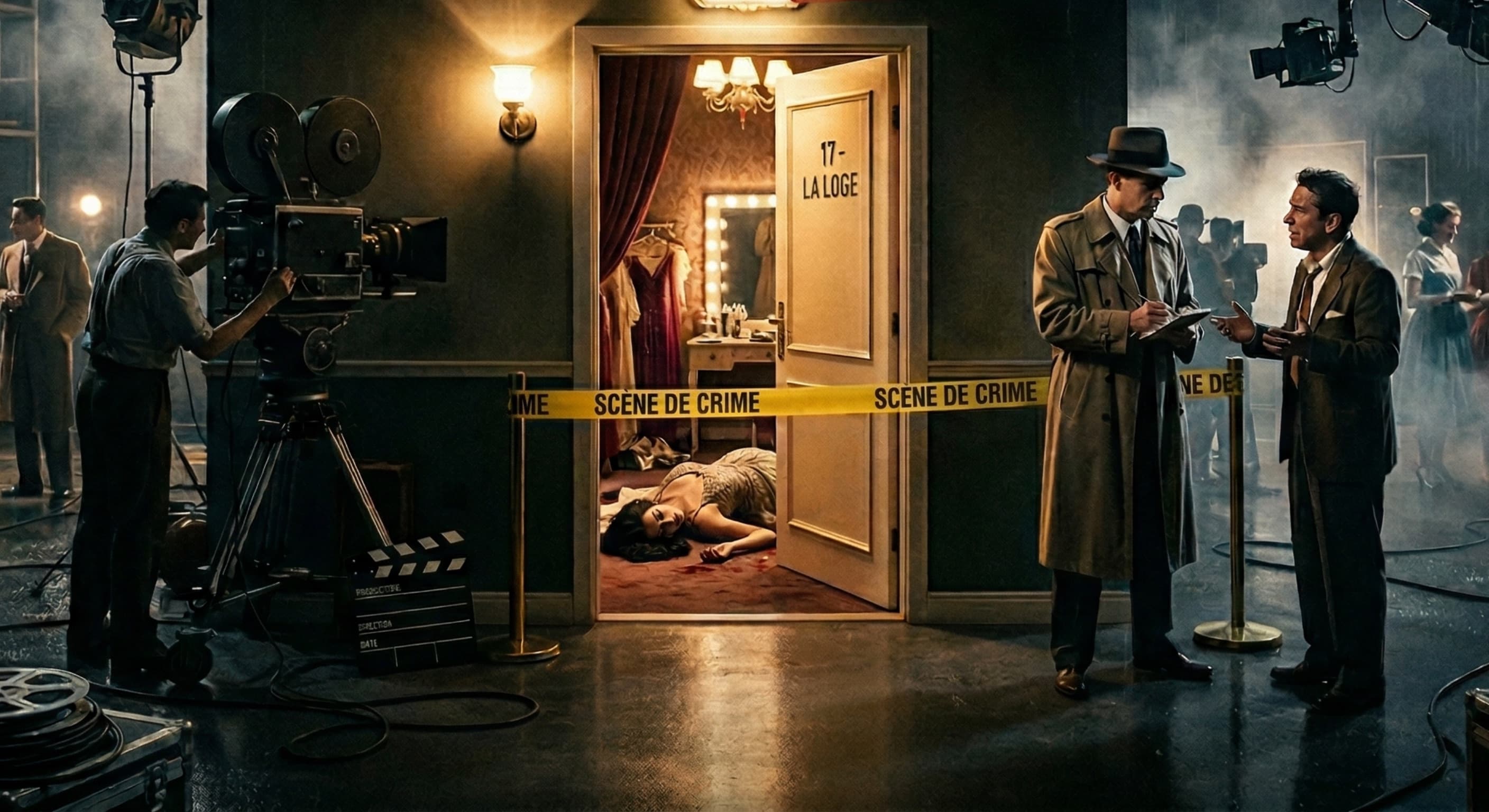
A small staged area gives guests something to gather around at the start and photograph all night. You need very little. A chalk or masking tape outline is unnecessary and is the one cliche that reads as a joke rather than a scene. Instead, stage the aftermath: an overturned chair, a glass on its side with a dark stain, a scattered handful of papers, a single shoe, a pair of glasses with one lens marked. Cordon it with a length of ribbon or string rather than plastic tape. Put it somewhere out of the traffic flow so nobody has to step over it all evening, and never where the food is. If your scenario specifies details about the crime, match the staging to them, since a guest who notices that the staged scene contradicts their character sheet will ask you about it in front of everyone. Ten minutes and five objects is the whole job, and it photographs better than anything you could buy.
Costume and decoration are the same project
Guests in character are the best decoration in the room, and they cost you nothing. Set the expectation low and specific in the invitation: one accessory that signals who you are, a hat, gloves, suspenders, a scarf, a brooch. Then help the people who will inevitably arrive without one. Keep a basket by the door with spare hats, feather boas, ties, costume jewelry and a couple of pairs of cheap glasses, collected from your own drawers. A guest who is handed a hat within thirty seconds of arriving joins the evening instead of apologizing for the next hour. This basket is also the fix for an unexpected plus one. Photographs from the night look enormously better for it, which matters more than hosts expect, since photographs are what makes the next invitation easy to say yes to. Birthday parties, as on /murder-mystery-birthday-party, live or die on this detail. Take the group photograph early, while the costumes are still intact and everyone is still holding their glass.
What is not worth your money or your time
Skip the themed paper plates and printed banners, which photograph badly and read as a child's party rather than a period evening. Skip the plastic skeletons and fake cobwebs unless your scenario is explicitly a haunted one, since they pull a 1920s club straight into Halloween. Skip fog machines in small rooms, where they set off smoke alarms and coat the furniture. Skip buying a full costume for yourself when you will spend the evening walking between rooms with a host guide in your hand. And skip any decoration that has to be finished on the day of the party, because the afternoon before guests arrive is for sorting envelopes and reading the guide, not for hanging bunting. The rule that holds every time is that guests remember conversations and accusations. Decoration only has to remove the distractions that would stop them committing to the story. Spend the hour you saved reading the host guide instead, which is the one piece of preparation that always pays.
Frequently asked questions
How much should I spend on decorations?+
Nothing is a realistic answer. Lamps instead of the ceiling light, a dark tablecloth, candles, and objects gathered from around the house cover everything that matters. If you buy one thing, make it cheap candles or a pack of place cards.
Do I need a crime scene setup?+
It is optional but it gives guests a focal point on arrival and photographs well. Ten minutes is enough: an overturned chair, a stained glass, scattered papers and a ribbon cordon. Skip the taped body outline, which reads as a joke.
How do I make a modern living room feel period?+
Remove rather than add. Hide chargers, remotes and plastic packaging, cover bright furniture with a dark throw, kill the overhead light, and put lamps and candles at table height. Ten modern objects removed beats ten period objects added.
What if my guests do not dress up?+
Keep a basket of spare hats, scarves, ties and costume jewelry by the door. Hand one to anyone who arrives without an accessory. It takes thirty seconds, removes the awkwardness entirely, and makes the group photographs far better.