Why these parties are harder to host than they look
A birthday has a script. A fresh start does not, and that is where hosts get stuck. Without a structure, the evening drifts toward the subject itself, and the guest of honor spends three hours fielding sympathetic questions and being told how well they are doing. Most people planning one of these parties want the opposite: an evening where the thing is acknowledged once, warmly, and then everyone gets on with having a good time. A murder mystery delivers exactly that shape. It occupies the middle of the evening completely, gives every guest a job, and produces conversations about a fictional crime rather than a real chapter. The toast still happens, but it happens at the end to a room that is already laughing. There is also something quietly satisfying about spending an evening solving a problem that has a clean answer, which is not always available in real life.
Set the tone before anyone arrives
The invitation does most of the work. Say what the evening is in one line, warmly and without heaviness: an evening to mark a new chapter, with a murder mystery party as the main event. That single framing tells guests to arrive ready to play rather than ready to console, which is the most useful thing you can do for the person the party is for. Ask the guest of honor first what they actually want acknowledged and how. Some people want the occasion named clearly in a toast; others want the party to simply exist without a speech. Both are fine and guessing wrong is the one real risk. Ask whether there is anyone they would rather not see on the guest list, and take the answer at face value without asking why. Five minutes of these questions ahead of time is worth more than any amount of decoration.
Keep the humor kind
There is a genre of divorce party built entirely on jokes at an absent person's expense, and it rarely ages well. It puts guests in the position of performing outrage on cue, it locks the evening to the person who is no longer there, and it can land badly if the guest of honor still has to co-parent, negotiate, or simply be civil next month. The better instinct is that this party is about the person in the room, not the one who is not. Choose a scenario whose plot has nothing to do with relationships ending. Heists, missing documents, corporate espionage, grand hotels, and period mysteries about money and reputation all work. Skip anything driven by infidelity, bitter divorces, or revenge against a spouse, however tempting the parallel seems. The humor of the evening should come from your friends lying badly to each other about a fictional crime, which is reliably funnier and leaves nothing behind.
Casting the guest of honor
Give them a character with real power in the plot: information others need, leverage over two or three people, and a secret worth protecting. That produces the right kind of evening, where they are busy, consulted, and in control of something. Avoid casting them as the victim for obvious reasons, and avoid any character written as pitiable, overlooked, or the butt of the plot. The culprit is a genuinely good option if they would enjoy it, since lying successfully to a room of friends for two hours is an excellent evening and an even better story afterward. Ask privately, several days ahead, so they can read the sheet properly. Whatever you choose, make sure their character is pulled into conversation in the first ten minutes rather than sitting in the background until round two. The first ten minutes set how the rest of the night feels for them. Check with them once, a few days ahead, that the character they have been given is one they are looking forward to playing.
Guest list and group size
Six to twelve players is the working range, and for this occasion the smaller end is often better. Eight close friends produce longer conversations, more attention on each person, and nobody drifting to the edge of a crowded room, which matters when the point is to be surrounded by people who are genuinely glad to be there. Invite the friends who have actually shown up over the last year rather than assembling the largest possible list. Mixed groups work well here: friends from different parts of life who have never met will bond over a shared suspect list faster than over small talk about how everyone knows the host. If a few guests are coming from far away or have never met anyone, give them characters at the center of the information network so people come to them. That is the same trick that makes the format work for a bachelorette weekend, and the planning notes on /murder-mystery-bachelorette-party transfer almost directly.
Choosing a theme that feels like a beginning
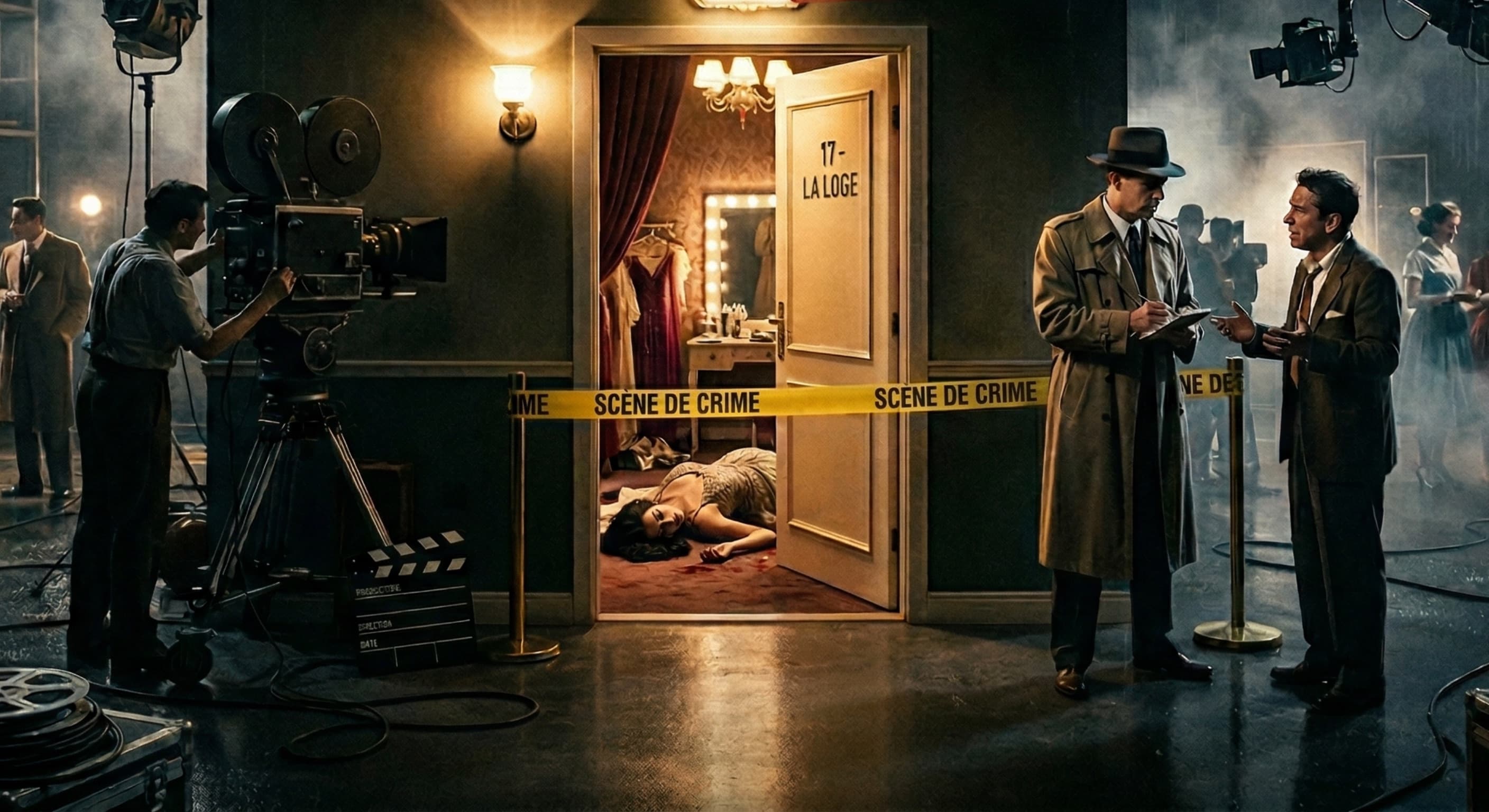
Themes carry mood, and this is one occasion where it is worth choosing deliberately. Settings with movement and glamour suit the evening better than gloomy interiors: a casino, a transatlantic liner, a film studio, a heist in a bright city, a grand hotel at the height of the season. These say new chapter without anyone having to say new chapter. Avoid haunted houses, funerals, and anything set among a grieving family, which is technically a fine mystery and the wrong note entirely for this particular night. The catalog on /murder-mystery-kits lists tone and setting alongside player counts, and every kit is a PDF you download and print yourself, from 39 to 59 dollars for the whole group. Costume level should be stated in the invitation as one accessory, because at this kind of party people tend to over-prepare and a guest in a full rented outfit next to seven friends in scarves is nobody's ideal.
Where the toast goes, and how long it should be
At the very end, after the reveal, and short. By that point the room has spent two hours arguing about an alibi and everyone is warm, loud, and in a good mood, which is a far better audience than a room called to attention at the start of the night. Thirty to sixty seconds is plenty. Say the thing, mean it, raise a glass, and let the party carry on. Do not invite three people to speak, do not ask the guest of honor to respond unless they have offered, and do not turn it into an open floor, because that is how a light evening becomes an emotional one at eleven o'clock. If they specifically asked for no speech at all, honor that completely: a private word at the door as people leave does more than a public toast ever will. What everyone remembers afterward is a night that was genuinely fun, which is the most useful thing a fresh start party can be.
Frequently asked questions
Is a murder mystery party appropriate for a divorce party?+
It works well because it gives the evening a structure that is not about the divorce. Choose a plot about money, a heist or a missing document rather than anything driven by infidelity or revenge, and the night stays light without pretending the occasion is not happening.
Should the invitation mention the occasion?+
Ask the guest of honor first. Some want it named warmly in one line, others want the party to simply exist. Either way, say clearly that the evening is a murder mystery party so guests arrive ready to play a character rather than ready to offer sympathy.
How many guests should I invite?+
Six to twelve, and the smaller end often suits this occasion better. Eight close friends give longer conversations and more attention on each person. Invite the people who have actually been present over the last year rather than building the biggest list you can.
What should I avoid when planning one?+
Jokes aimed at an absent former partner, scenarios about bitter separations, and a toast that runs long. Keep the humor pointed at your friends lying badly about a fictional crime, put the toast at the end, and keep it under a minute.