What music is actually doing at a murder mystery party
It is doing three jobs and none of them is entertainment. The first is covering silence, which matters enormously in the first twenty minutes when guests are arriving and nobody has started talking in character yet. A quiet room makes people whisper. A room with music at low volume makes people speak up. The second job is signaling. A change in the music tells the room that something has shifted, which lets you move between rounds without shouting over eight conversations. The third is period. Two minutes of the right style does more to establish a 1920s club or a 1970s winter resort than any decoration you could buy, and it costs nothing. Understanding those three jobs tells you what to avoid: anything that demands attention, anything that makes people want to sing along, and anything so loud that players stop being able to hear each other. Everything else in a playlist is decoration on top of those three functions.
Volume is more important than track selection
Get this wrong and nothing else matters. Music at a murder mystery party should sit just under the level of normal conversation, so that two people standing three feet apart never raise their voices, and a room that goes quiet immediately notices the music is there. The practical test is simple: stand at the far corner from the speaker and have someone speak to you at a normal volume. If you strain, it is too loud. Set the level during setup with the room empty, then turn it down two more notches, because eight talking guests absorb far less sound than you expect and the room will feel louder than it is. Turn the volume down another step at the start of each investigation round, since players are now trading specific details and mishearing a name can genuinely break the case. Raise it during the food break. When in doubt, quieter always beats louder at a party built entirely on conversation.
Build it in four blocks, not one long list
A single three-hour shuffle will drift into the wrong mood at the wrong moment. Build four short blocks instead. Block one, arrival, runs about thirty minutes and is the most upbeat of the evening: warm, familiar, in period, the kind of thing that plays in a bar. Block two, investigation, runs ninety minutes and should be almost furniture: instrumental, mid-tempo, no dramatic swells. Block three, the food break, goes back up in energy for twenty minutes. Block four, the reveal, is the shortest and often empty. Build each block with about twenty percent more material than you need, because a round that runs long and then loops back to the first track is a small but noticeable break in the spell. Name the playlists clearly on your phone so you are not scrolling while eight people watch you. Set each block to play in order rather than on shuffle, so the arrival music does not arrive in the middle of round two.
Choosing by era without overthinking it
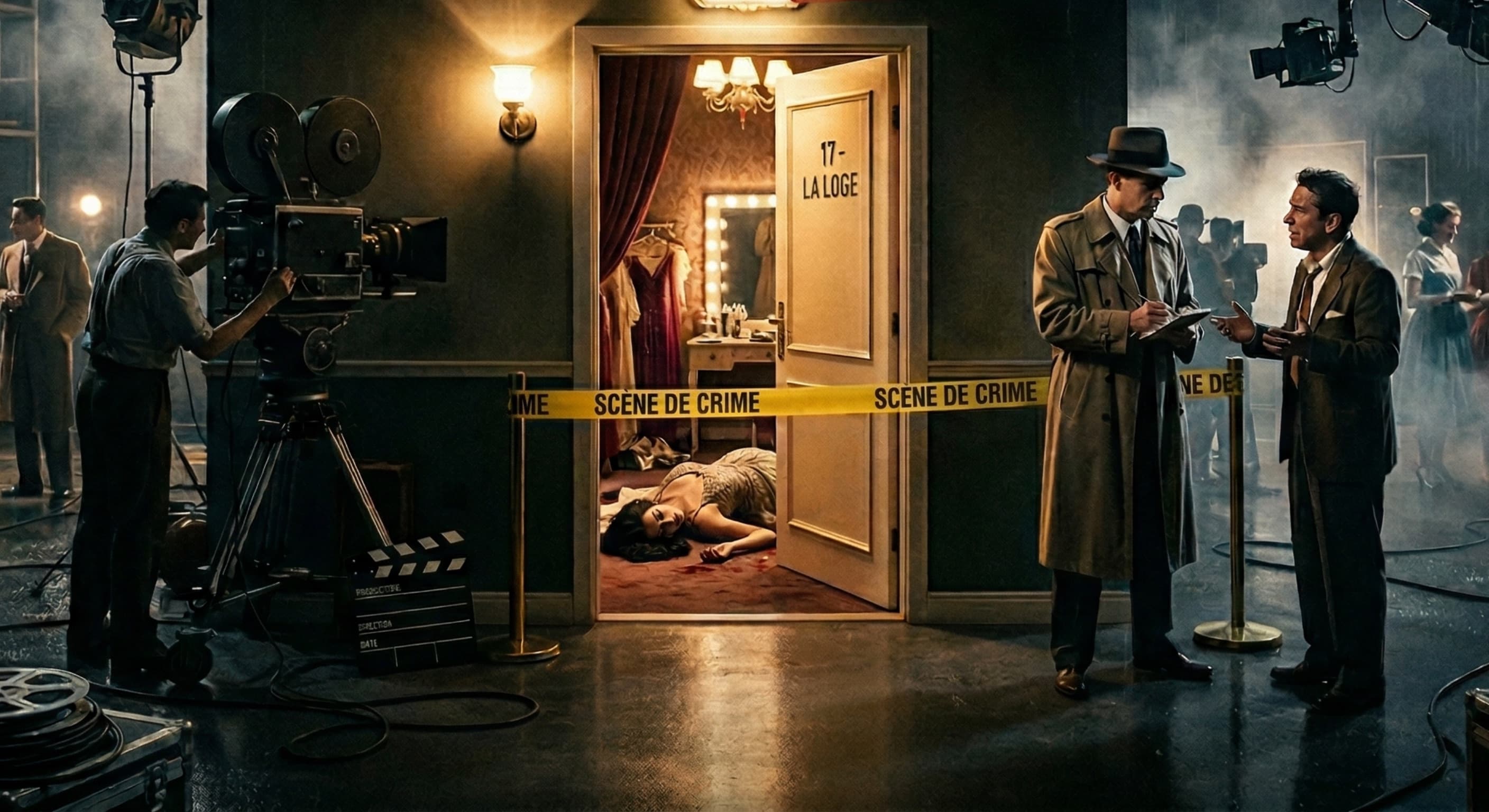
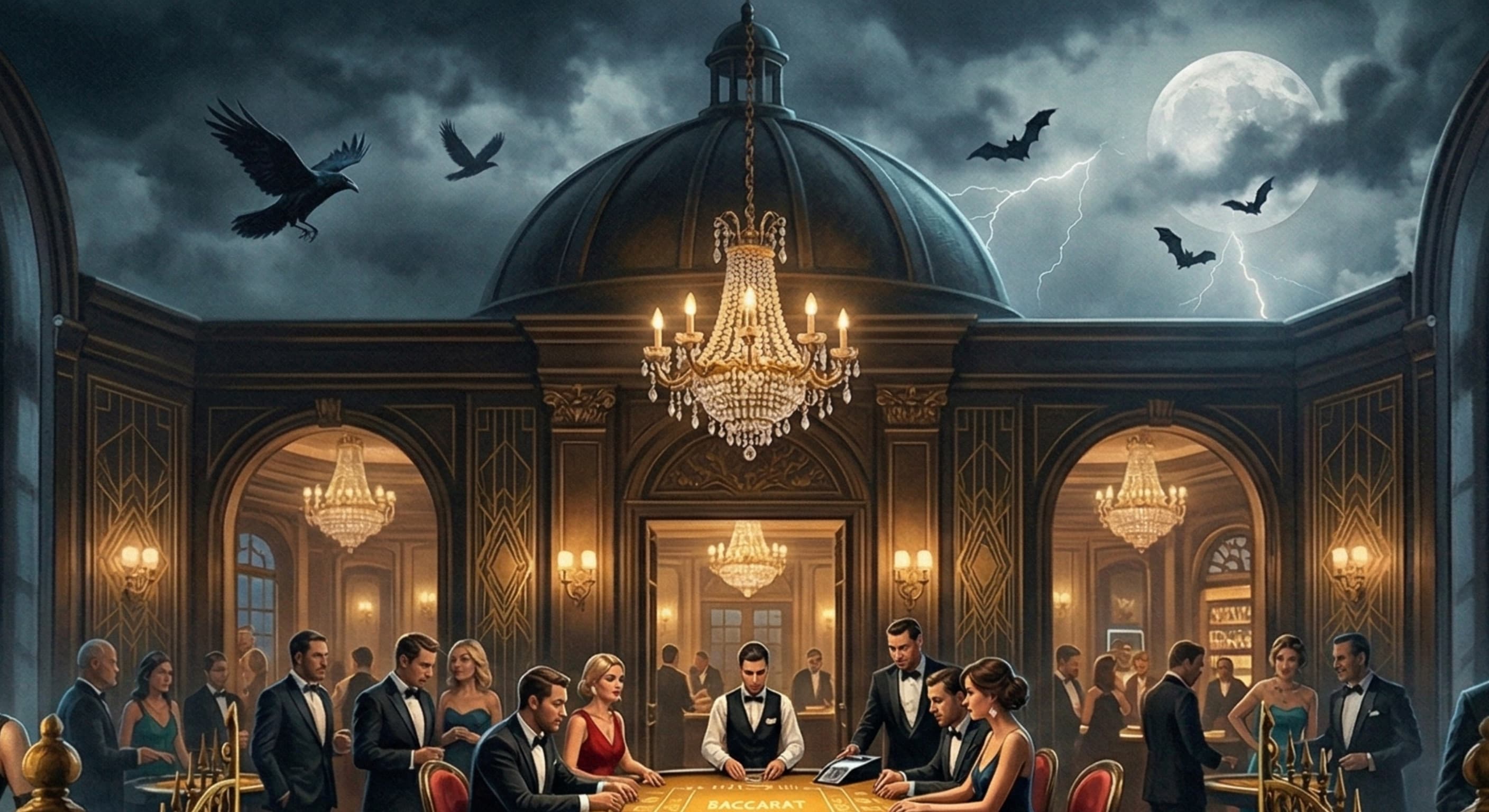
Match the sound to the scenario rather than to your own taste. A 1920s speakeasy wants hot jazz, dance band recordings and ragtime piano. A 1930s train or ocean liner wants orchestral swing and light salon music. A mid-century Hollywood setting wants noir film scoring, brushed drums and a solo saxophone. A 1970s scenario wants soft rock, lounge and early disco played quietly. A country house or manor setting works with chamber strings and solo piano, which also happens to be the easiest background music in existence. A casino or high society evening wants cocktail jazz and bossa nova. If you cannot identify an era, instrumental jazz at low volume is the universal default and has never once made a party worse. Scenarios on /murder-mystery-kits state their setting and year clearly, which is all the direction you need to search for a matching mood. Searching for the year and the word instrumental is usually enough to find a ready-made list you can trim.
Instrumentals win, lyrics compete
During investigation rounds, use instrumental tracks almost exclusively. Lyrics compete directly with conversation for the same part of a listener's attention, and at a party where players are trying to remember that someone mentioned a missing key, that competition has a real cost. Vocals are fine during arrival and during the food break, when the room is louder and the stakes are lower. The same logic applies to anything famous: a song everyone knows pulls three people out of character to discuss it. Avoid tracks with abrupt loud openings, which startle a quiet room, and avoid anything with a long silence in the middle that will read as the music failing. If you are using a streaming service, turn off autoplay so that the algorithm does not append a modern pop track to your carefully built 1920s block at the exact moment of the reveal. One track that pulls the room out of character costs you more than ten minutes of investigation.
Silence, and the three places to use it
The most effective sound cue of the night is turning the music off. Use it in three places. First, at the opening: cut the music, let the room notice, and read the opening passage into the quiet. The drop in sound gets attention more reliably than raising your voice ever will. Second, at the end of each round, where a fade tells everyone to return to the table without you having to announce it twice. Third and most importantly, at the reveal. Kill the music completely before the written accusations and leave it off through the solution and the culprit's explanation. A silent room makes every accusation land harder and makes the pause after the name is read genuinely dramatic. Bring music back up the moment the reveal is over, which signals that the game has ended and the evening has become a normal party again. That contrast, rather than volume, is what people remember about the sound of the night.
Practical setup, so nothing fails at 8 pm
Download your playlists for offline use rather than relying on the connection, because the one time the stream stutters will be during the reveal. Put the device in do not disturb so that a message notification does not play through the speaker mid-round. Use a small speaker placed away from the main conversation area, ideally in a corner or on a shelf behind people rather than in the middle of the table, which spreads the sound instead of aiming it at one guest. Plug the device in or start the evening at full battery, since three hours of playback plus a screen you keep waking will drain a phone. If possible, use a second device for music so your own phone stays free for timing the rounds. Test the whole chain the day before. A party held for a bachelorette weekend, as on /murder-mystery-bachelorette-party, or any other occasion runs on the same setup.
Frequently asked questions
Should there be music during the investigation rounds?+
Yes, but quiet and instrumental. It covers silence and keeps the period alive without competing with conversation. Set it just below normal talking level, and turn it down one more notch when players start trading specific names and details.
What music works if my scenario has no clear era?+
Instrumental jazz at low volume suits almost any setting and never feels wrong. Solo piano and chamber strings are the other safe defaults. Both stay in the background, which is exactly what you want while people are questioning each other.
Do I need a real sound system?+
No. One small portable speaker in a corner is enough for eight to twelve people in a living room. Placement matters more than power: put it behind the group rather than in the middle, so the sound spreads instead of dominating one seat.
Should I play music during the final reveal?+
No. Turn it off completely before accusations and leave it off through the solution. Silence makes each accusation land and gives the pause after the culprit is named real weight. Bring the music back the moment the reveal finishes.