Why the haunted manor is the easiest gothic setting to run
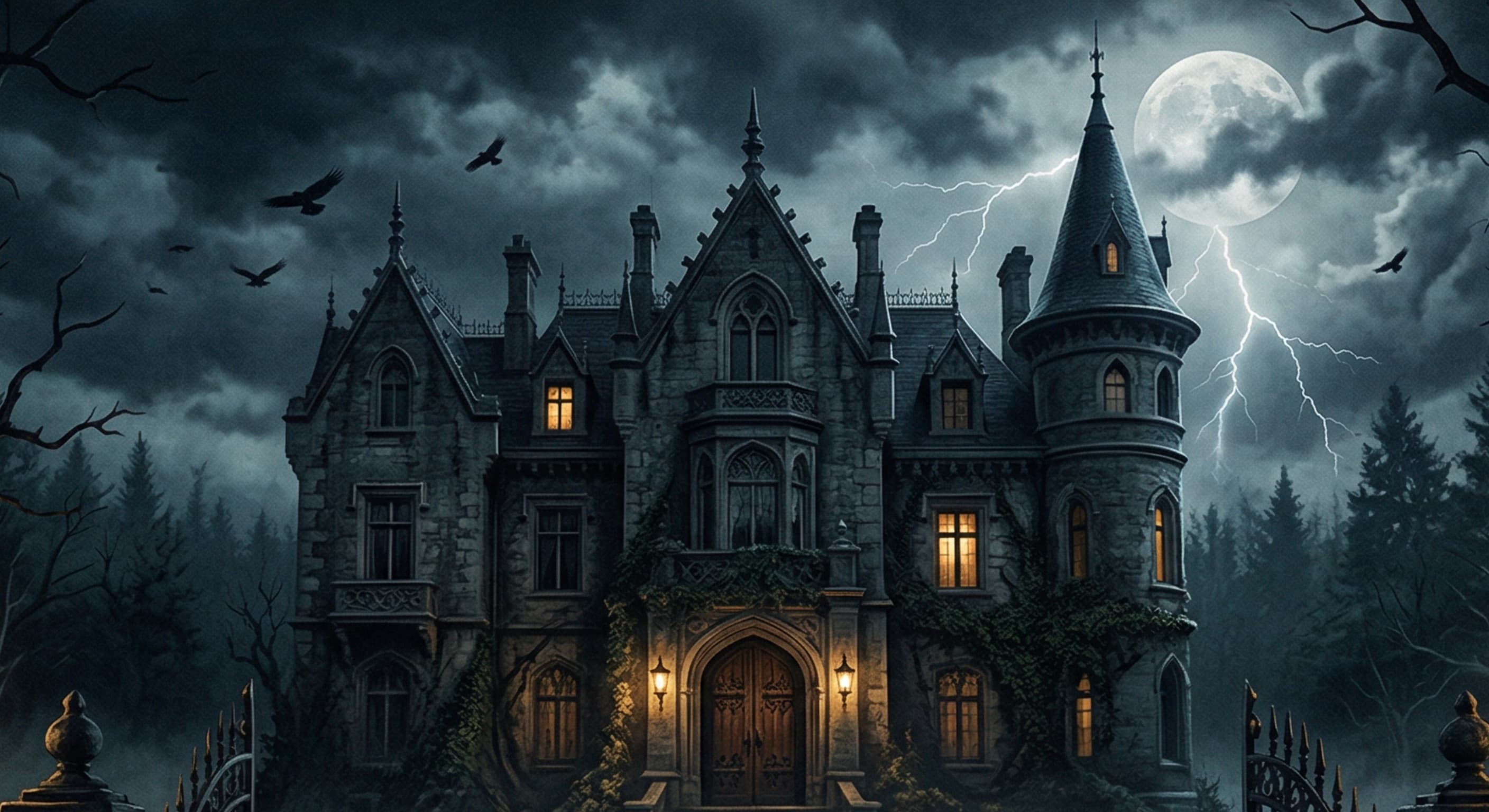
The manor works because it does three jobs at once. It explains why nobody leaves, since the road is flooded, the bridge is out, or the last train has gone. It explains why everyone is present, because a will is being read, an inheritance is being announced, or a family has gathered for a funeral. And it gives every character a reason to want something from the person who died. Those three jobs are usually the hardest part of writing a mystery, and the setting handles all of them before the first line of dialogue. For a host, that means less explaining on the night. You read one opening passage about the storm and the house, and the room understands the rules immediately. There is no learning curve, no invented world to describe, and no technology to rule out. Guests have seen this setting in a hundred films and books, so they arrive already knowing how to behave inside it, which is exactly what you want from a theme.
Build the atmosphere with light before you buy anything
Lighting does more for a gothic evening than every prop combined, and it costs almost nothing. Turn off every ceiling light in the room you are using. Replace them with lamps at table height, and put warm bulbs in them if you have any. Add candles in whatever holders you own, real if the room is safe for it, battery powered if children or long sleeves are involved. Cluster them rather than spreading them evenly, because pools of light with dark gaps between them look like an old house, while even light looks like a kitchen. Drape a dark sheet or blanket over anything modern and reflective, especially a television. If you have a mirror, leave it, since mirrors in half light are pure gothic. Close the curtains even if it is still light outside. The entire setup takes fifteen minutes and it is the single highest return decision you will make. Guests walk in, the room is dim and gold, and they lower their voices without being asked.
Costumes guests can assemble from their own closet
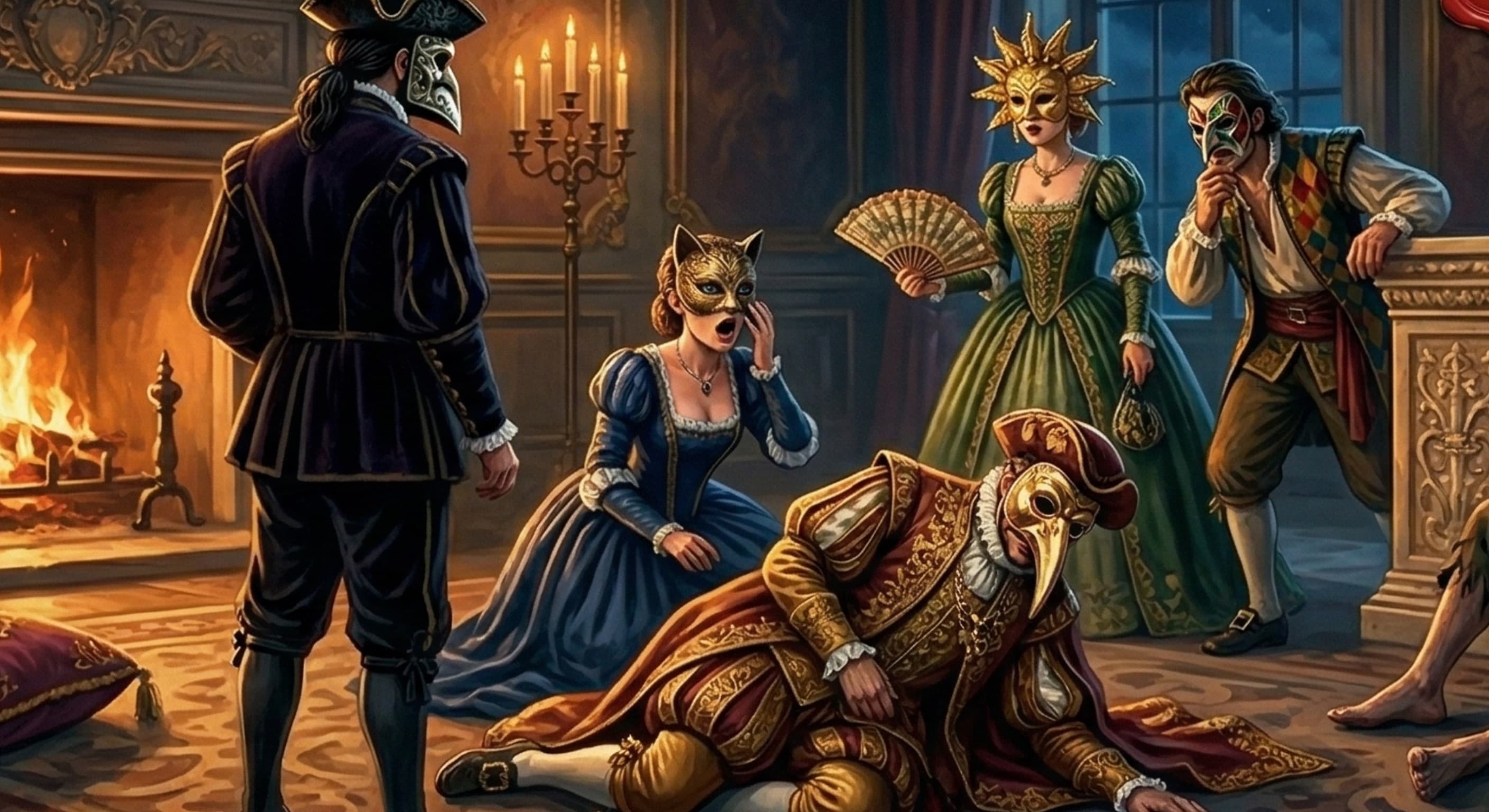
Keep the instruction simple: dark colors, something formal, one old fashioned detail. That is achievable for everyone and it photographs beautifully. For men, a dark suit or plain trousers with a waistcoat and a shirt buttoned to the collar reads as period without effort, and a pocket watch on a chain finishes it. For women, a long dark skirt or dress, a high collar, a shawl, and hair pinned up is enough. Lace, cameos, brooches, and heavy rings all help, and most people own one of those without realizing it. Staff characters are even easier, since a white shirt with a dark apron covers a housekeeper or a butler. Tell guests explicitly that nobody needs to buy anything, because the fastest way to lose a guest is to make them feel they must shop. If someone turns up in jeans, hand them a shawl or a waistcoat at the door and they are instantly part of the picture. One accessory does the work of a full costume.
Sound: a storm, a clock, and a lot of silence
Gothic atmosphere is mostly about what you do not hear. Play a long rain and thunder track at low volume, quiet enough that guests notice it only when the conversation pauses. Avoid anything with a beat, and avoid horror movie strings, which push the evening toward parody. If you want music instead of weather, a solo piano or a string quartet at background level works, and a slightly scratchy old recording works even better. The most effective sound in the room is a clock. A ticking clock, even a cheap one, does something to a quiet room that no playlist can. Place it where the group can hear it during lulls. Save your one loud moment for the reveal, when a thunderclap or a sudden silence lands hard because nothing else has been loud all night. Check the volume from the far side of the room before guests arrive, since what sounds subtle next to the speaker is often inaudible across a full room.
Decorating a manor for under thirty dollars
You do not need to build a set, you need five or six suggestive objects placed where people will lean. Start with what you own: a stack of old books, a decanter, a silver tray, a framed portrait turned slightly crooked, a vase of dead or dried flowers. Add a white sheet thrown over one chair as if the room has been closed for years, which is free and reads instantly. A thrift store visit will get you a tarnished candlestick, a chipped teacup, and an ugly framed painting of someone nobody knows, which becomes the ancestor everyone jokes about all evening. Print the clues from your kit on slightly heavier paper, then age them with a wash of cold tea and ten minutes on a radiator. For the entrance, a single candle or lantern by the door tells guests the evening has already started. Spend your money on light and paper, not on decorations, because guests remember the conversations and the clues they held in their hands.
The plots that actually work inside a locked house
Manor mysteries live on inheritance, legitimacy, and old debts. The strongest engine is a will that has just changed, or is about to, because it gives every person in the room a measurable motive you can state in one sentence. Layer a second engine underneath: a child nobody acknowledges, a business quietly failing, a letter that proves an old death was not an accident. Ghosts should stay ambiguous rather than real. The moment a genuine supernatural culprit is possible, deduction stops mattering and players give up on the evidence. Use the haunting as pressure instead, with footsteps, a portrait that moves, a name whispered in a corridor, all of which turn out to have human explanations that point at the killer. Physical geography helps too, so decide early which characters were in the library, the cellar, and the east wing, and let players map it. The scenarios on /murder-mystery-kits that use a manor setting are built this way, with the house itself acting as the clue board.
Pitfalls that turn a gothic night into a haunted house
The first pitfall is decorating with Halloween stock. Plastic skeletons, cobweb spray, and orange lights are a different genre, and mixing them in tells guests the evening is a joke. If you want gothic, everything should look like it belongs in a house somebody actually lived in. The second is jump scares. Sending someone to bang on a door mid-round breaks concentration and costs you ten minutes of investigation. The third is over-committing to accents. One guest doing an accent is charming, a whole room attempting it becomes exhausting by round two. The fourth is darkness taken too far, because players still need to read clue documents, so keep at least one bright reading lamp available. The fifth is length. A gothic atmosphere is heavier than a comic one, and heavy atmosphere thins out after three hours, so plan to reach the accusation while the room is still leaning in. If you are printing at the last minute, the checklist on /printable-murder-mystery-kit covers paper, ink, and timing.
Frequently asked questions
Do I need an actual old house for this theme to work?+
No. A normal living room with the overhead lights off and candles on the table reads as a manor within thirty seconds. What sells the setting is low warm light, dark clothing, and the opening passage explaining why nobody can leave, not the architecture of your building.
Should the ghost be real in a haunted manor scenario?+
It works far better if every apparition turns out to have a human explanation. If players believe a ghost could be the culprit, they stop weighing evidence and start guessing. Use the haunting to create pressure and misdirection, then let the solution be entirely human.
How many players suit a manor mystery?+
Six to twelve is the sweet spot. A manor plot runs on family relationships and a contested inheritance, which needs enough people to form factions but few enough that everyone can be interrogated. Kits run from 39 to 59 dollars depending on the player count they cover.
Can I run this theme in October without it becoming Halloween?+
Yes, and many hosts do. Keep the decor to candles, old books, dark fabric, and dried flowers, and leave the plastic props in the box. The difference between gothic and Halloween is almost entirely a question of which objects you put on the table.