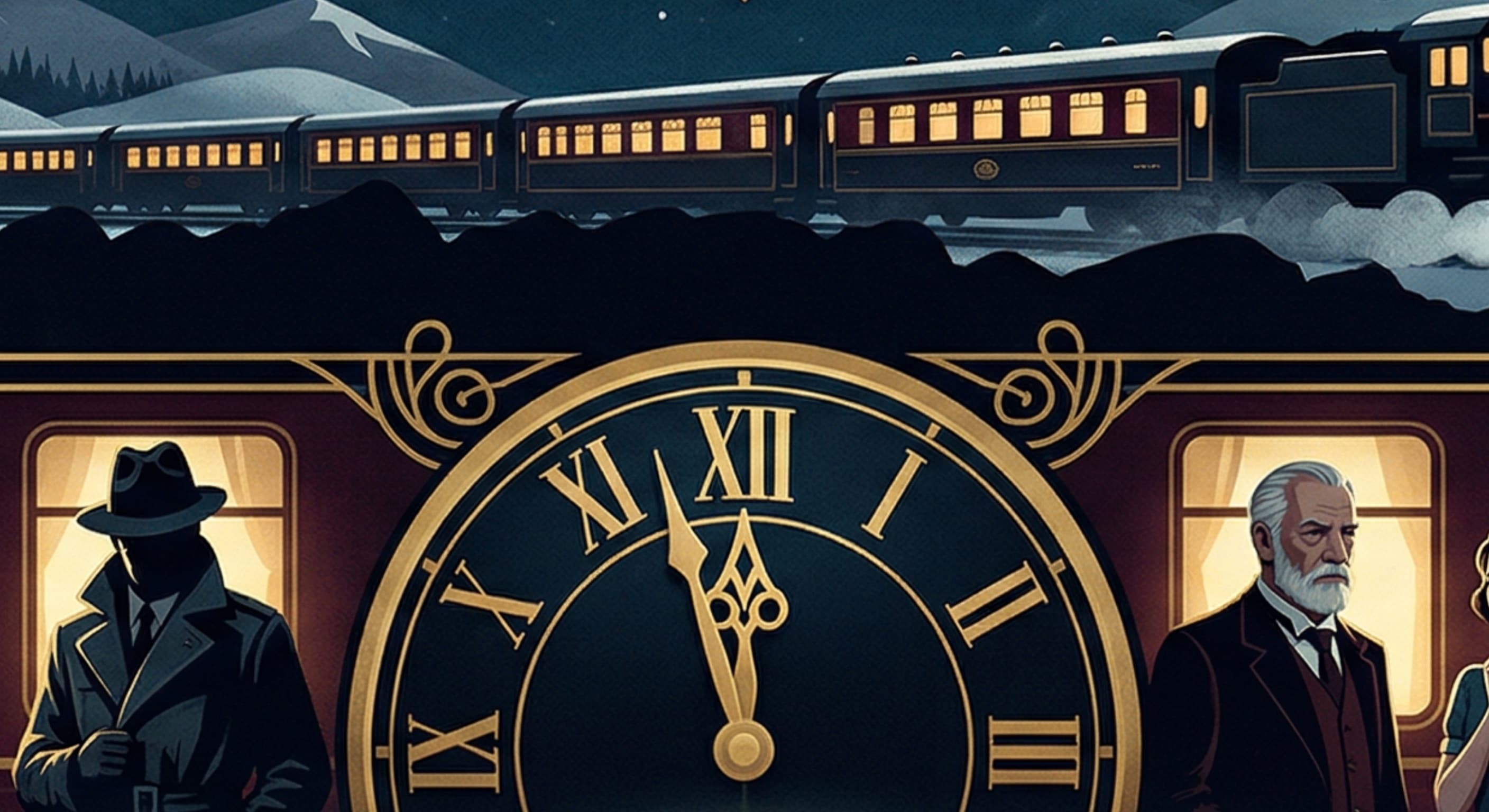
Why a ship at sea is the cleanest closed circle there is
Every murder mystery needs a reason the suspects stay in one place, and a liner provides the most airtight version. There is no road, no phone that reaches land reliably, and no police until the ship docks in four days. That single fact changes how players behave. They stop asking whether someone could have run, and start asking who was on which deck at which hour, which is exactly the thinking a good mystery wants. A ship also comes with a built in social structure, since first class, second class, and crew are separated by real barriers that the plot can violate. A stoker in a dining room is an event. A countess below decks is a scandal. That hierarchy hands you motive, opportunity, and suspicion without any extra invention. For the host, the setting is also flattering. You are asking guests to dress well, drink something with a stem, and behave beautifully in public while lying privately, which most groups enjoy far more than they admit.
The 1930s look, assembled without shopping
Interwar formal is kinder to modern wardrobes than most people expect. For men, a dark suit is already correct, and adding a white shirt, a tie or bow tie, and a handkerchief in the pocket finishes it. Slick the hair back and the decade arrives on its own. A blazer with a white shirt and a silk scarf tucked at the neck reads as a wealthy passenger relaxing on deck. For women, a long bias cut dress, satin or anything with drape, plus a long string of pearls, is the whole silhouette. A finger wave is not required, though a side part and a hair clip suggest it. Crew characters are the easiest of all, since a white shirt with dark trousers covers a steward, and a navy blazer with brass buttons covers an officer. Tell guests the dress code in one line: black tie for first class, plain and practical for crew. Assign a couple of guests to crew roles deliberately, because the visual contrast is what makes photographs of the night work.
Turning a dining room into a first class lounge
Deco is about geometry and shine, not clutter. Lay a white cloth on the table, use your best glasses even if they do not match, and put something metallic at the center, a tray, a candlestick, a bowl. Fold the napkins into simple triangles and stand them up. If you have any symmetrical objects, place them in pairs, because paired objects read as a ship interior while scattered ones read as a home. Print a menu card for each seat with the ship name and the date, which takes ten minutes and does more for the illusion than any decoration. A rope, a life ring, or a nautical print near the entrance sets the location, and one is enough. Avoid pirate imagery entirely, as it belongs to a different century and a different tone. If you can dim the lights and place a lamp low, the room will look like it is lit by the sea outside. Total cost is a printer, a tablecloth, and whatever you already own.
Sound design: engines, an orchestra, and the sea
Two layers do the work here. Underneath, a very quiet loop of engine hum or distant waves, low enough that nobody consciously hears it but everyone feels the room is moving. On top, a small dance orchestra of the period at conversation level, the kind of recording with a slight crackle. Between rounds, cut the music entirely and leave the engine running, which makes the ship feel vast and empty and signals that something has changed. A ship bell or a single chime is the perfect round marker, and a small bell costs a few dollars or can be a glass struck with a spoon. Save one dramatic effect for the reveal, such as cutting all sound at once. As with any themed evening, test the volume from the far corner of the room before guests arrive, because a full room of talking people absorbs far more sound than an empty one and hosts routinely set their playlist twenty percent too quiet.
Plots that take advantage of a ship
The strongest liner plots run on identity. A passenger traveling under a false name, a stolen ticket, a man recognized by a steward who served him in another life, a woman fleeing a scandal one continent behind her. Because the ship isolates everyone from records and witnesses, a claimed identity cannot be verified, which puts the burden on the players to find contradictions in what people say. Smuggling is the second reliable engine, since cargo, customs, and a manifest give you physical clues that can be passed around the table. Blackmail thrives in this setting too, as everyone is paying for a reputation. Use the geography hard: deck plans, cabin numbers, the time a door between classes was unlocked. Hand out a simple printed deck plan and players will investigate for an hour longer. If you want a scenario already structured this way, the travel themed titles on /murder-mystery-kits use exactly these engines, and a liner evening also suits an anniversary or a formal celebration described on /murder-mystery-wedding-party.
Casting the passenger list
A liner casts itself once you think in tickets rather than personalities. Put a shipping line heir on board who stands to lose the company, an aging star traveling with too much luggage, a widow whose jewelry is insured for more than it is worth, a doctor who has lost his license somewhere else, a journalist chasing one of the others, and a purser who knows the real contents of the safe. Add at least two crew characters, because crew see everything and are never suspected, which makes them excellent sources and excellent culprits. Give each character one object they must not lose, a key, a passport, a locket, a folded telegram. Physical objects give shy players something to do with their hands and something concrete to negotiate over. If your group has an obvious performer, cast them as the star, and give the quietest guest the steward, since a steward has a legitimate reason to approach any conversation in the room and never has to start one from nothing.
Details that quietly sink the voyage
The most common mistake is letting guests call the police. Decide before the night whether a wireless operator exists, and if one does, make the message take hours to be answered. The second mistake is treating the ship as generic luxury, which produces a night that feels like a wedding with a plot attached. Name the ship, name the ports, give the crossing a date, and repeat those details. The third is mixing eras, since a jazz playlist from 1955 or a phone used openly at the table costs you the illusion instantly. The fourth is over-serving early, because a sophisticated setting invites cocktails from the moment guests arrive, and a table that has been drinking for two hours cannot reconstruct a timeline. The fifth is forgetting the crew, who are often written as background and then have nothing to do for an hour. Give them errands, deliveries, and reasons to interrupt. A ship without visible crew feels like a hotel that happens to float.
Frequently asked questions
Does this theme only work with a big group?+
It scales well from eight upward, because a passenger list can grow without straining the plot. Below eight, cut the crew roles first and keep the passengers, since passengers carry the motives. Kits run from 39 to 59 dollars depending on how many players they cover.
What should I serve at an ocean liner murder mystery party?+
Anything you can plate in courses works, because the dining service is part of the setting. Print a menu card, serve a soup, a main, and a dessert with breaks between them, and let each break become a round change. Cold dishes prepared in advance are the safest choice for a host.
Is a liner scenario suitable for a work event?+
Yes, and it is one of the better choices. The dress code is clear, the tone stays elegant rather than silly, and the class structure on board creates natural mixing between people who do not usually talk. Keep the alcohol light and the rounds firmly timed.
How do I stop players from just accusing the crew?+
Give at least two passengers secrets that are obviously worse than anything the crew is hiding, and reveal one of those in round one. Once the table learns that the people in evening dress have the real motives, suspicion redistributes itself without any intervention from you.