Shotguns, courtyards and high ceilings
The local housing stock is built for exactly this. A shotgun house runs room to room in a line with no hallway, which sounds like a drawback and is actually the best possible layout for a murder mystery party, because players physically pass through other people's conversations on their way anywhere. A double shotgun or a camelback gives you the same plus a separate wing. Creole cottages and townhouses in the Quarter and the Marigny bring the courtyard, which is the single best feature available to any host in the country: an enclosed outdoor space with its own light, usable most of the year, where two characters can step away and still be visible through a doorway. Garden District and Uptown houses supply double parlors with sliding doors, which lets you open or close the main space as the evening needs. High ceilings and ceiling fans matter too, because a room of twelve people talking gets warm fast here.
Scheduling around Carnival, heat and hurricanes
The local year has a shape that outsiders get wrong. Carnival season opens on January 6 and builds through parades and balls until Mardi Gras, and during those weeks the city's social calendar is completely spoken for, so do not compete with it. What works instead is the stretch after Carnival through April, when the weather is superb and people are looking for something to do again, and the fall window from October into December, which is the strongest of the year. Summer is brutal, humid and effectively indoor only from June through September, and hurricane season officially runs June 1 to November 30, so anything you schedule inside that range should carry a stated backup date in the invitation. Jazz Fest at the end of April and the start of May takes its own weekends. October is the single best month here for a mystery, for obvious atmospheric reasons and because the humidity finally lets go.
The masked ball is already local
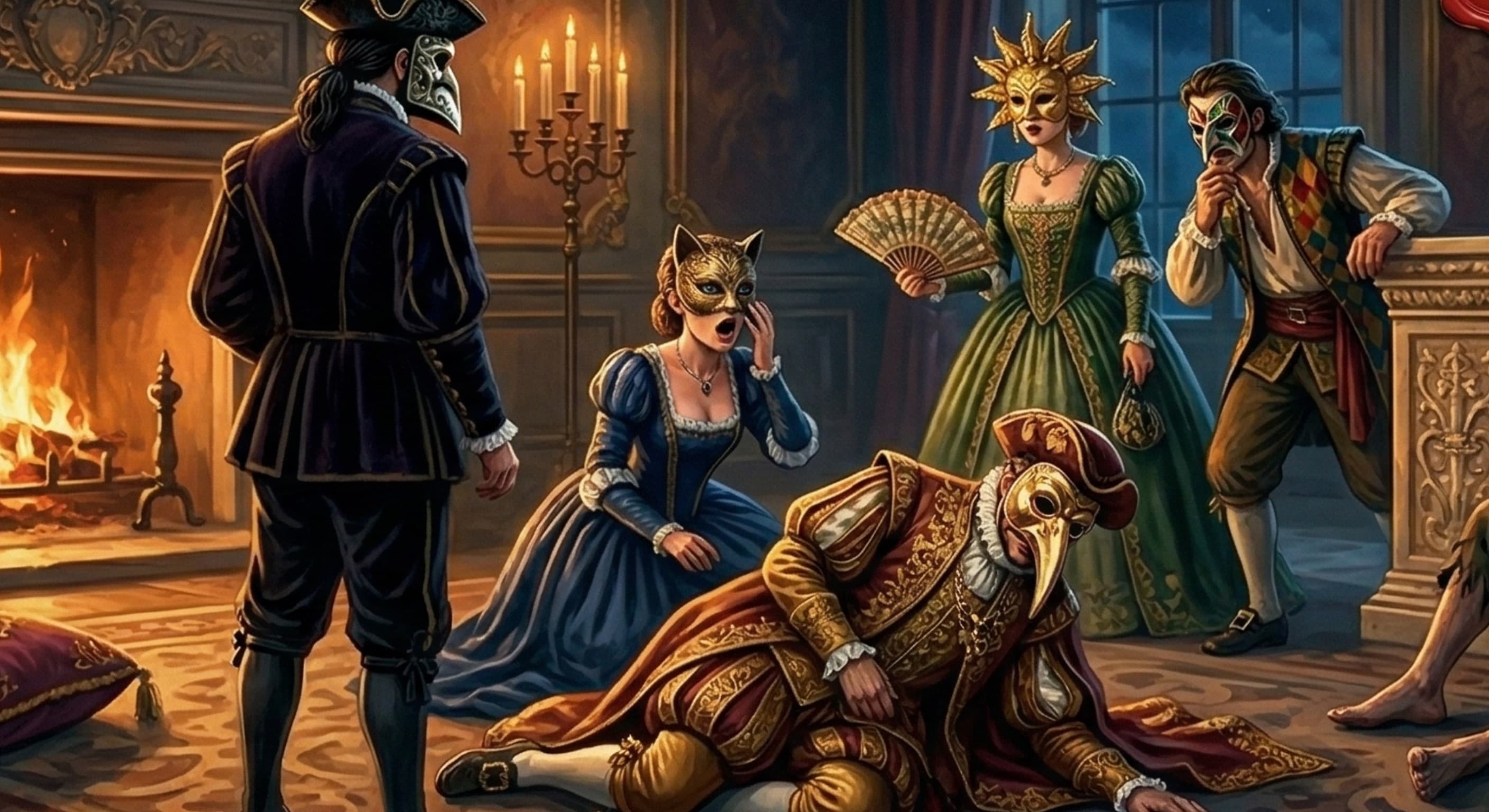
In most cities a masquerade scenario requires you to explain the concept and beg guests to buy masks. Here the tradition of the ball, the krewe and the tableau is part of the civic year, masks are sold cheaply in the Quarter twelve months out of twelve, and half your guest list has a box of them in a closet already. Use that. A masquerade scenario removes the biggest obstacle to guest participation anywhere else, and in this city the costume bar clears itself. Borrow the formality of a real ball for the structure of your evening: a receiving moment at the door, a court or a host figure with authority inside the fiction, a set of rules everyone pretends to take seriously. The gap between the ceremony and what people are actually doing behind the masks is exactly the tension a mystery runs on, and it is a gap this city understands better than any other.
Local history with genuine weight
Three strands give a scenario something to stand on. Storyville, the district where prostitution was legally tolerated from 1897 until 1917, produced a documented world of music, money, photographs and respectable men with second lives, which supports a plot about reputation rather than inheritance. The Axeman case of 1918 and 1919 is a real unsolved series of attacks, notorious for a letter published in the newspapers in which the writer promised to spare any house where jazz was playing, and the city reportedly answered by playing jazz all night. That is a premise no fiction writer would dare invent. For a third register, the above ground cemeteries, the yellow fever epidemics and the nineteenth century merchant families give you the gothic material the city is known for. Use them as setting and motive, keep the tone playful, and rename the fictional street after a real one. A scenario that borrows one true detail from the city it is played in reads as researched rather than generic.
Humidity, paper and practical setup
Humidity is the local enemy of a printed kit. Character sheets curl within an hour on a courtyard table, heavier stock softens, and an envelope left out overnight will not sit flat again. Print the day before, keep the stack sealed in a bag in an air conditioned room, and bring the clues out only as you hand them over. Do not stage the evidence table in the courtyard even when the courtyard is where the party is, since a breeze plus damp paper is a bad combination. Run the ceiling fans and set the air conditioning lower than feels necessary, because a dozen people in costume raise a room's temperature quickly. Candles are traditional here and work well indoors with high ceilings, but use hurricane glass or battery lamps outside where any breeze will defeat them. Print sheets in black and white, save color for photographs, newspaper pages and handwritten letters.
Food and drink that does not trap you in the kitchen
This city makes the food problem easy, because so much of what it does best is either served at room temperature or improved by sitting in a pot for an hour. A gumbo or a jambalaya held on low needs no attention once guests arrive. Muffuletta cut into wedges, boiled shrimp with remoulade, a tray of deviled eggs and a bowl of red beans cover a dozen people without a single dish requiring your hands in the final thirty minutes, which is exactly the rule. Put the main spread out between the first and second rounds so eating becomes the break rather than a distraction. On drinks, batch one period cocktail in a pitcher rather than mixing to order, and make a non alcoholic version in the same glass with the same garnish so nobody is visibly marked. Keep water carafes on every surface, since people in costume forget to drink it entirely.
What it costs against the paid experience economy
New Orleans sells experiences by the head at a scale few cities match, with ghost tours, history walks, haunted house dinners and hosted mystery evenings all quoting per person on a fixed schedule. For two people that is reasonable. For a group of twelve celebrating a birthday or a bachelorette weekend, it becomes the largest line item of the trip, and everyone is following a guide rather than participating. A printable kit is 39 to 59 dollars for the whole group, downloads instantly, and turns an empty evening in a rented shotgun house into the part of the trip people retell. That is roughly three dollars a guest. Player counts and themes are listed on /murder-mystery-kits, and /murder-mystery-bachelorette-party covers casting and tone for a weekend group. The files stay yours, so the scenario goes home and gets run again. There is a second advantage worth naming for anyone planning a trip here. A tour departs at a fixed hour and a hosted dinner needs a reservation weeks out, while a printed kit slots into whichever evening turns out to be free once the rest of the weekend has taken shape.
Frequently asked questions
When is the best time to host a murder mystery party in New Orleans?+
October is the strongest month, with the humidity gone and the atmosphere free. The stretch from after Mardi Gras through April is excellent too. Avoid Carnival season itself, when nothing competes successfully with the parades and balls, and keep June through September strictly indoors.
Is a shotgun house big enough for a murder mystery party?+
Yes, and the layout works in your favor. Rooms in a line mean players pass through conversations on the way anywhere, which generates exactly the overheard fragments the format thrives on. A courtyard, a porch or a double parlor adds the private space you need for stepping aside.
How do I stop the humidity from ruining the printed materials?+
Print the day before, keep the stack sealed in a bag in an air conditioned room, and bring clues out only as you hand them over. Never stage the evidence table in the courtyard. Run the fans and set the air conditioning lower than feels necessary once guests arrive.
Do guests here actually dress up for a masquerade scenario?+
More reliably than anywhere else in the country. Masks are sold cheaply year round and most households already own several, and the tradition of the ball means nobody needs the concept explained. State the era in the invitation and the costumes largely take care of themselves.