Devon, 1890, and a manor nobody wants to sleep in
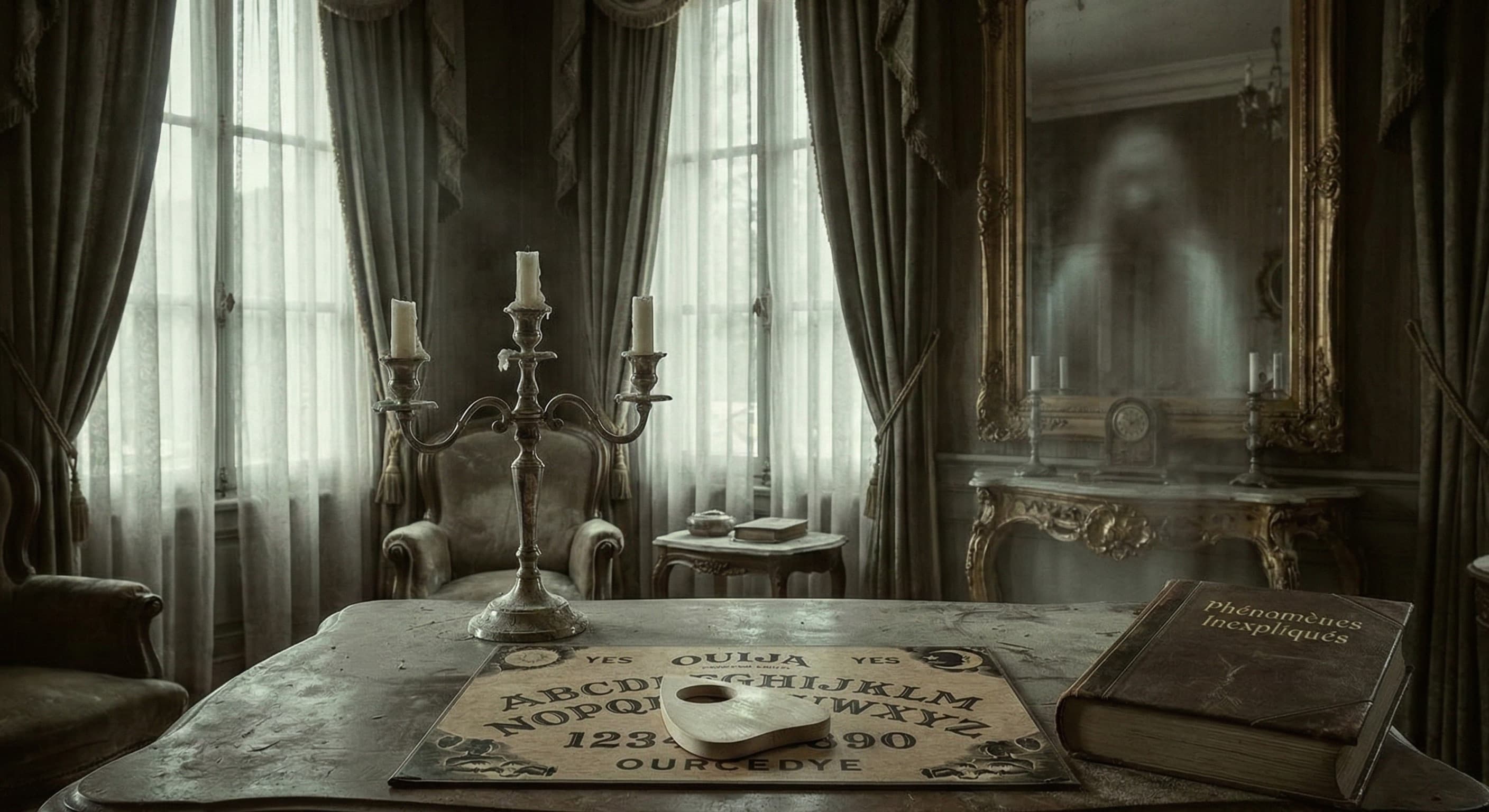
Lady Edwina Blackwood is sixty two, widowed, and living at Blackwood Manor in the Devon countryside. Since late August, the house has been coming apart. Objects move. Spectral voices carry from the library. A greenish glow appears in the east corridor. Chains rattle in the cellar. The manifestations arrive every night between eleven and two, and only in three specific areas of the house. The servants have left one by one until only Higgins, the butler, remains. Lady Blackwood has hired your agency, and you are specialists in paranormal phenomena, which in this business means specialists in finding out how a haunting is manufactured. The setting does something clever. A ghost story is usually about atmosphere, and here the atmosphere is the evidence: the timings, the rooms, the temperature of the corridor and the mechanism behind the glow are all things you can measure on paper. It is the most gothic looking file in the range and one of the most rational to solve.
The ten exhibits in the folder
You print ten pieces of evidence and lay them on a table. Three are witness statements, from Lady Blackwood herself, from Higgins the butler, and from Mrs. Doris Plimpton, the cook who walked out at the end of September. There is a floor plan of the manor marking the zones where the manifestations occur, which matters more than it first appears. There is a page of the Devon Herald from October 1890, a private letter from Lady Blackwood's nephew Charles to a man named Vickers, a technical analysis of a spirit photograph, and an inspection report on a vaulted passage under the house. There is a receipt from Whitmore and Sons, apothecaries, and finally a coded journal whose pages were seized at the village inn. Five puzzles sit alongside the exhibits, and a set of progressive hints lets a stuck table take one nudge at a time instead of surrendering to the answer. The solution is sealed at the back of the file and is not opened until you have committed to a conclusion.
How a session actually goes
There is no host and no game master. Everyone at the table is an investigator, and you solve it together. You read the briefing aloud so that everyone shares the same starting facts, then work through the exhibits in whatever order you like, solve the five puzzles by cross referencing documents, and deliberate until you agree on who, how and why. Only then do you unlock the solution. The file teaches its own method, which is the part beginners find most useful. For each suspect you test motive, means and opportunity, and the guide is explicit that no single document convicts anyone on its own. It also gives you a working order: establish first how the haunting is being produced, then list everyone who benefits from Lady Blackwood being frightened, then test each of them against the dated nights in the statements. Ninety minutes is the realistic runtime for a table of four working carefully.
Three stars out of five, and what that means
This file is rated three out of five, which puts it at the accessible end of the range. That does not mean easy. It means the puzzles are fair, the reading is manageable, and no step requires specialist knowledge or a leap you could not make from the paper in front of you. It is a good first case file for a table that has never done one, and a good choice if your group includes someone who enjoys the story more than the cryptography. There is one genuinely interesting wrinkle that the briefing states plainly: more than one person stands to gain from Lady Blackwood's fear. That single line reframes the whole exercise, because the obvious question stops being who did it and becomes how many of them were involved and in what. Tables that rush past that sentence tend to commit early to one name and then have to walk it back, which is exactly the lesson the file is teaching.
The group this is built for
Two to six players, and it is one of the best two player evenings you can buy. A murder mystery party needs a crowd, but a case file works perfectly for a couple at a kitchen table, which makes this a genuinely good date night at home. It also suits a small family evening with older teenagers, a rainy afternoon with friends, and a quiet Sunday for two people who like puzzles. Four is the number where discussion is richest without anybody being left without a document to read. Because there is nothing to perform and no character to inhabit, it is the right product for people who like mysteries but have no interest whatsoever in acting, which describes a lot of perfectly good guests. If you have a larger group and want them talking in character instead, the scenarios on /murder-mystery-kits cover six to twelve players. That is a different kind of evening entirely, and both have their place.
What to prepare, and who should skip it
Preparation is fifteen minutes: print the file, cut out the evidence, put paper and pencils on the table. Play by candlelight with some Victorian era classical music, and let everybody take notes like real investigators. That is the whole setup. As for who should skip it: anyone hoping for a costume party, because this is a table exercise and there is nothing to dress up for. Anyone expecting a real ghost story, because the premise is that you are there to test the haunting rather than be frightened by it. Anyone who wants a large group event, since six is the ceiling and four is better. And anyone who wants the hardest thing in the range, because three stars is deliberately approachable and the harder files on /detective-case-files will suit you better. Younger children will struggle with Victorian handwriting and long statements, but a twelve or thirteen year old who likes mysteries will do fine alongside an adult.
Getting the most out of the evening
Spread every exhibit face up where all of you can see it rather than passing documents around one at a time. The cross referencing is the game, and it stops working when half the paper is in somebody's lap. Assign the floor plan and the statements to different people at the start, since those two sets are designed to be compared and it goes faster when two readers can argue across them. Use the progressive hints properly: take one, discuss, and only take another if you are still stuck ten minutes later. Tables that burn through all the hints at once have effectively read the solution. Write your conclusion down before you open the sealed answer, including how the phenomena were produced and why each person you cleared is cleared. It feels bureaucratic and it doubles the satisfaction, because a case file is only really solved when you can explain the innocent as confidently as the guilty.
Frequently asked questions
How many people can play The Phantom Affair?+
Two to six. Four is the best number for discussion, and two works genuinely well as an evening for a couple. There is no host role to fill, because everyone at the table is an investigator working from the same set of ten exhibits.
How long and how hard is it?+
About ninety minutes, rated three stars out of five. That is the accessible end of the range: the puzzles are fair, the reading is manageable, and nothing requires specialist knowledge. It is a solid first detective case file for a table that has never tried one.
Is there actually a ghost?+
That is the question you are hired to answer, and the file will not be spoiled here. What we can say is that your objective is stated plainly in the briefing: determine whether the haunting is real or manufactured, and identify the person or persons responsible for what is happening at the manor.
What is included and what does it cost?+
A print ready PDF at $39, delivered in seconds with nothing shipped. Inside: an investigator guide with the deduction method, the case briefing, ten pieces of evidence, five puzzles, a set of progressive hints for a stuck table, and the sealed solution with the full story.