Why the era was made for murder mysteries
Victorian London hands you three things a mystery needs and most settings only give you one. It gives you darkness, since streets lit by gas and thickened by coal fog mean witnesses genuinely cannot be sure what they saw. It gives you class, so a room containing a lord, a physician, a governess, and a housemaid already contains conflict, obligation, and information that cannot travel freely between people. And it gives you documents, because the Victorians wrote everything down: letters, telegrams, ledgers, calling cards, railway timetables, inquest reports. That last point matters more than it sounds. Paper clues are the most satisfying kind for players to handle, and this period produces them naturally. Add a police force that is new, underfunded, and widely distrusted, and you have a perfect excuse for a group of private individuals to investigate a death themselves rather than waiting for an inspector, which is the central question every host has to answer somehow.
Costumes: silhouette first, details second
Guests do not need crinolines. What sells the period is covered arms, a high neckline, a long skirt, and hair that is up rather than down for the women, and for the men a waistcoat, a buttoned shirt, and trousers in a dark plain fabric. A waistcoat is the single highest impact item, and most people own one or can borrow one. Add a pocket watch on a chain, a cravat or a plain tie knotted high, and the era arrives. For women, a long dark skirt with a fitted blouse and a cameo or brooch at the throat is entirely convincing, and lace gloves or a shawl finish it. Working class characters are easier still: a plain shirt with rolled sleeves, an apron, a flat cap, a shawl over the head. Encourage a visible class split in the costumes, because the contrast between a silk waistcoat and a coal stained apron in the same room is what makes photographs of this theme so effective.
Gaslight, fog, and a parlor you already own
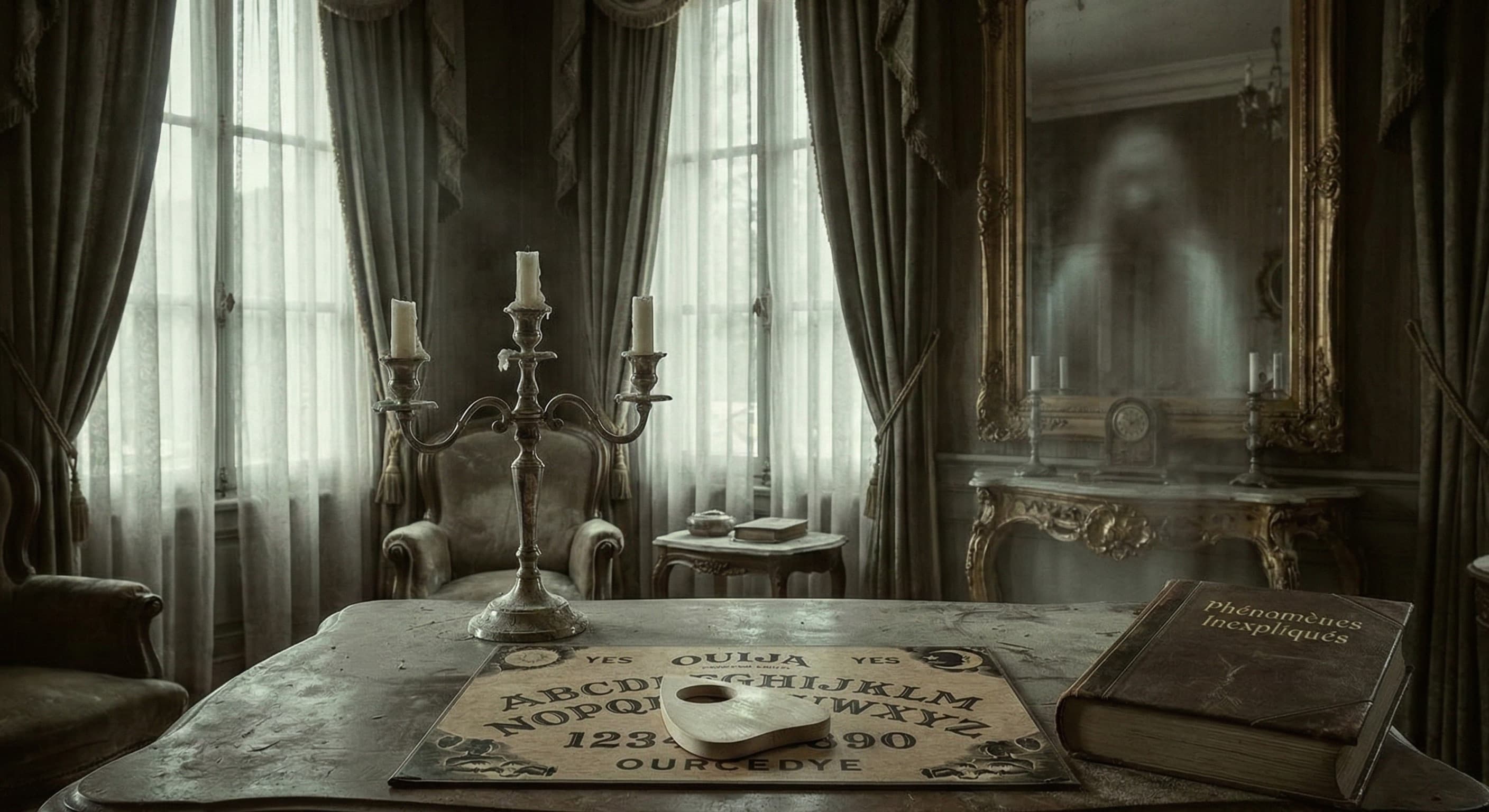
A Victorian parlor was crowded, warm, and dark, which is easy to fake. Cover surfaces with fabric, since tablecloths, runners, shawls draped over chair backs, and a throw on the sofa instantly upholster a modern room. Put out a tea service, a stack of books, framed photographs, and dried flowers under a glass dome if you happen to own anything like it. Lamps at low height with warm bulbs, plus candles, give you gaslight. For fog, you do not need a machine: heavy curtains drawn, a dim hallway, and a lamp behind a sheer fabric panel suggests it well enough. Print your clue documents on cream paper in a serif typeface, since a period letter is worth more than any decoration. If your scenario includes a seance, clear a round table, cover it in a dark cloth, put a single candle at the center, and that corner of the room will do the rest of the work by itself.
The seance, and how far to take the occult
Victorian London was gripped by spiritualism, and a seance is one of the best set pieces available to a host, provided you keep it on the right side of the line. Run it as a scene rather than a mechanic. The medium is a character, the table is dark, hands are joined, and something happens that unsettles the room. The crucial decision is that the medium is always a fraud, whether well meaning or predatory, and every phenomenon has a physical explanation the players can eventually uncover. A hidden bell, a confederate in the next room, information bought from a servant. That keeps deduction meaningful, and it also produces the best possible clue trail, since every trick leaves evidence. Cast the medium carefully, because the role rewards a guest who enjoys attention. If your group is two people rather than a full party, the same period and the same evidence based approach drive the solo investigations on /detective-case-files, which cost 39 dollars and need no host at all.
Plots built on respectability
In this period, reputation is a financial asset. A broken engagement, an illegitimate child, a bankruptcy, a stay in an asylum, or a relationship the law of the day criminalized could all destroy a person more thoroughly than an accusation of theft. That makes blackmail the natural engine of a Victorian mystery, and it lets you give every character something specific to lose. Layer it with money: a contested will, a failing factory, an insurance policy taken out three months ago. Class mobility is the other great engine, since a servant who knows too much and a gentleman who owes a tradesman are both explosive relationships. Use the geography of a house, because upstairs and downstairs mean characters have restricted access, and a person found in the wrong corridor is already suspicious. Keep the solution grounded in motive and opportunity rather than obscure forensic knowledge. Period scenarios ready to print are on /murder-mystery-kits, and they include the letters and documents the era demands.
Traps of a well documented period
The first trap is accent theater. A whole room attempting Victorian speech becomes a parody within thirty minutes, so ask guests to use formal address, surnames with titles, and complete sentences, which reads as period without anyone performing. The second is anachronistic detection. Fingerprints were not used in British courts until the early 1900s and forensic science barely existed, so a mystery solved by a lab result feels wrong and, more practically, removes the need for players to talk to each other. The third is the fog machine, which looks impressive for five minutes and then sets off a smoke alarm and irritates anyone with asthma. The fourth is treating servants as scenery. Servant characters are the best roles in any Victorian scenario because they move between rooms and hear everything, so write them as real players with their own agendas. The fifth is the one nobody plans for: modern phones on the table. Collect them in a bowl at the door with a printed card explaining why.
Frequently asked questions
Do I need to worry about historical accuracy?+
Only enough to keep the illusion intact. Get the big things right, such as no telephones in most homes, no reliable forensics, and travel by rail and carriage. Guests do not audit the details, but a phone call or a DNA test will break the spell instantly.
Can Victorian London work as a Halloween theme?+
Yes, and it is a more atmospheric choice than most. A seance, a fog bound street, and a body pulled from the river deliver the mood without any plastic decorations. Keep the props to candles, cloth, and paper and the night will look far better in photographs.
How do I explain why the police are not solving this?+
Use the period against them. The nearest constable is an hour away, the family refuses to involve the police because of the scandal, or the investigation has already been closed as an accident. Any of those is historically plausible and gives your characters a reason to investigate themselves.
What is the best group size for this theme?+
Eight to twelve works best, because you want at least two social classes represented with enough characters in each. If your group is smaller, keep the family and one servant, and fold the outside characters into a single visiting investigator role.